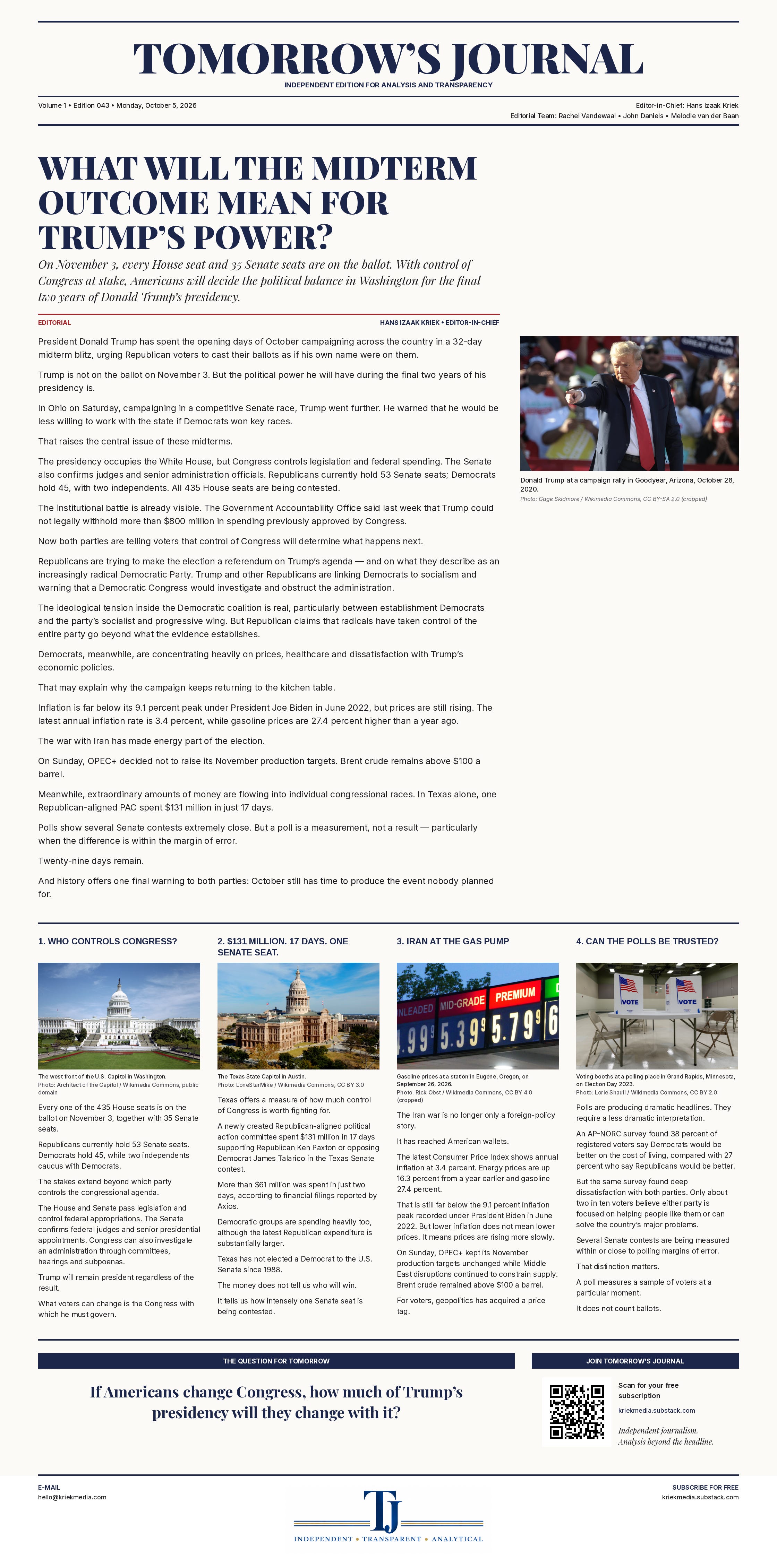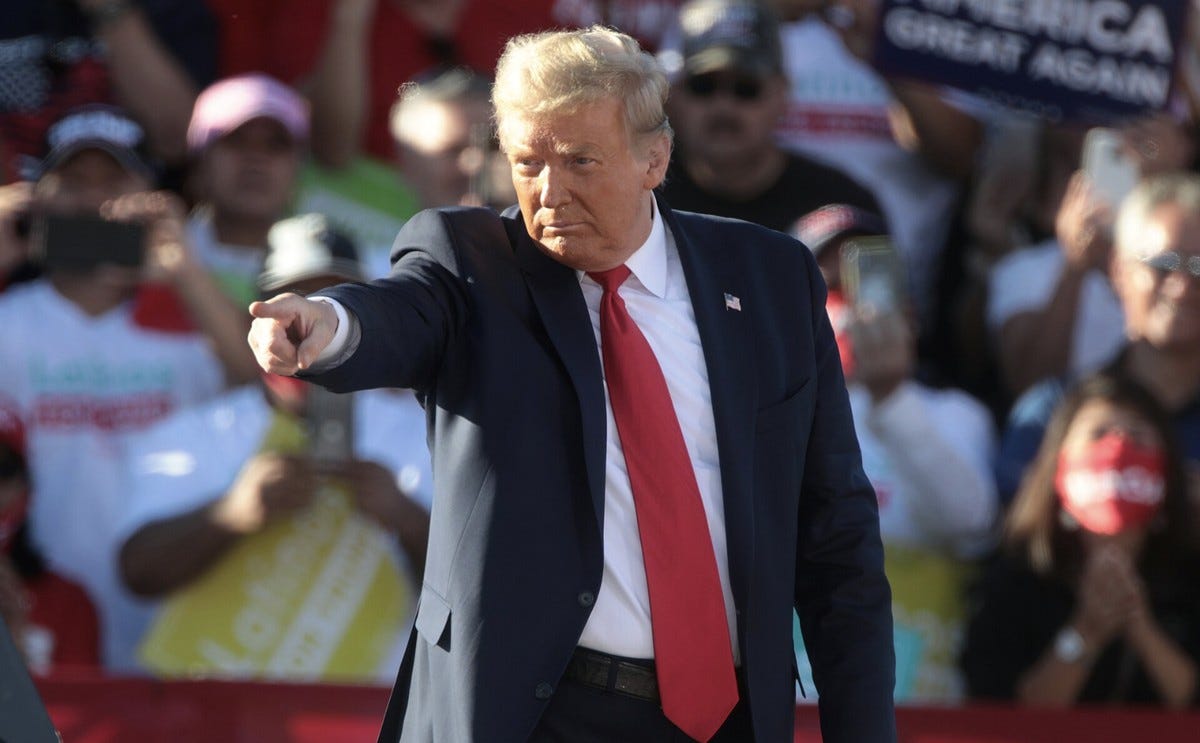
President Donald Trump has spent the opening days of October campaigning across the country in a 32-day midterm blitz, urging Republican voters to cast their ballots as if his own name were on them.
Trump is not on the ballot on November 3. But the political power he will have during the final two years of his presidency is.
In Ohio on Saturday, campaigning in a competitive Senate race, Trump went further. He warned that he would be less willing to work with the state if Democrats won key races.
That raises the central issue of these midterms.
The presidency occupies the White House, but Congress controls legislation and federal spending. The Senate also confirms judges and senior administration officials. Republicans currently hold 53 Senate seats; Democrats hold 45, with two independents. All 435 House seats are being contested.
The institutional battle is already visible. The Government Accountability Office said last week that Trump could not legally withhold more than $800 million in spending previously approved by Congress.
Now both parties are telling voters that control of Congress will determine what happens next.
Republicans are trying to make the election a referendum on Trump’s agenda — and on what they describe as an increasingly radical Democratic Party. Trump and other Republicans are linking Democrats to socialism and warning that a Democratic Congress would investigate and obstruct the administration.
The ideological tension inside the Democratic coalition is real, particularly between establishment Democrats and the party’s socialist and progressive wing. But Republican claims that radicals have taken control of the entire party go beyond what the evidence establishes.
Democrats, meanwhile, are concentrating heavily on prices, healthcare and dissatisfaction with Trump’s economic policies.
That may explain why the campaign keeps returning to the kitchen table.
Inflation is far below its 9.1 percent peak under President Joe Biden in June 2022, but prices are still rising. The latest annual inflation rate is 3.4 percent, while gasoline prices are 27.4 percent higher than a year ago.
The war with Iran has made energy part of the election.
On Sunday, OPEC+ decided not to raise its November production targets. Brent crude remains above $100 a barrel.
Meanwhile, extraordinary amounts of money are flowing into individual congressional races. In Texas alone, one Republican-aligned PAC spent $131 million in just 17 days.
Polls show several Senate contests extremely close. But a poll is a measurement, not a result — particularly when the difference is within the margin of error.
Twenty-nine days remain.
And history offers one final warning to both parties: October still has time to produce the event nobody planned for.
1. WHO CONTROLS CONGRESS?
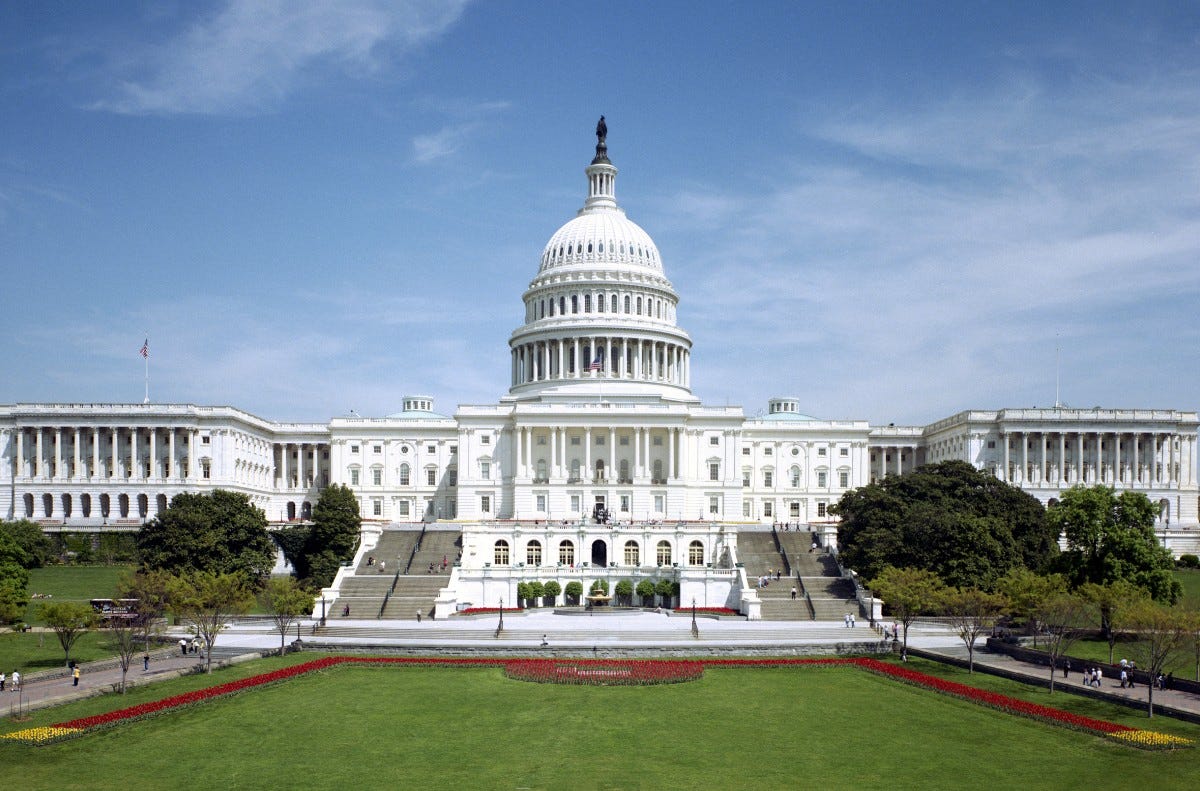
Every one of the 435 House seats is on the ballot on November 3, together with 35 Senate seats.
Republicans currently hold 53 Senate seats. Democrats hold 45, while two independents caucus with Democrats.
The stakes extend beyond which party controls the congressional agenda.
The House and Senate pass legislation and control federal appropriations. The Senate confirms federal judges and senior presidential appointments. Congress can also investigate an administration through committees, hearings and subpoenas.
Trump will remain president regardless of the result.
What voters can change is the Congress with which he must govern.
2. $131 MILLION. 17 DAYS. ONE SENATE SEAT.
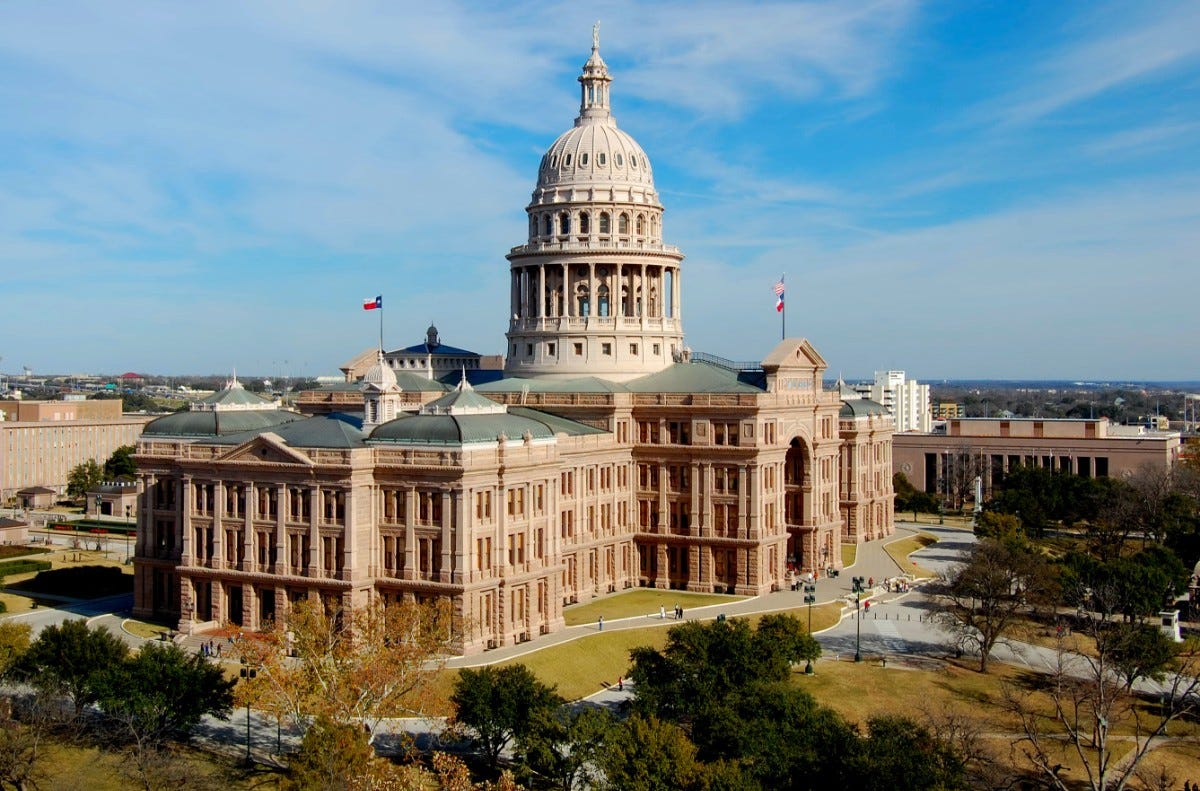
Texas offers a measure of how much control of Congress is worth fighting for.
A newly created Republican-aligned political action committee spent $131 million in 17 days supporting Republican Ken Paxton or opposing Democrat James Talarico in the Texas Senate contest.
More than $61 million was spent in just two days, according to financial filings reported by Axios.
Democratic groups are spending heavily too, although the latest Republican expenditure is substantially larger.
Texas has not elected a Democrat to the U.S. Senate since 1988.
The money does not tell us who will win.
It tells us how intensely one Senate seat is being contested.
3. IRAN AT THE GAS PUMP
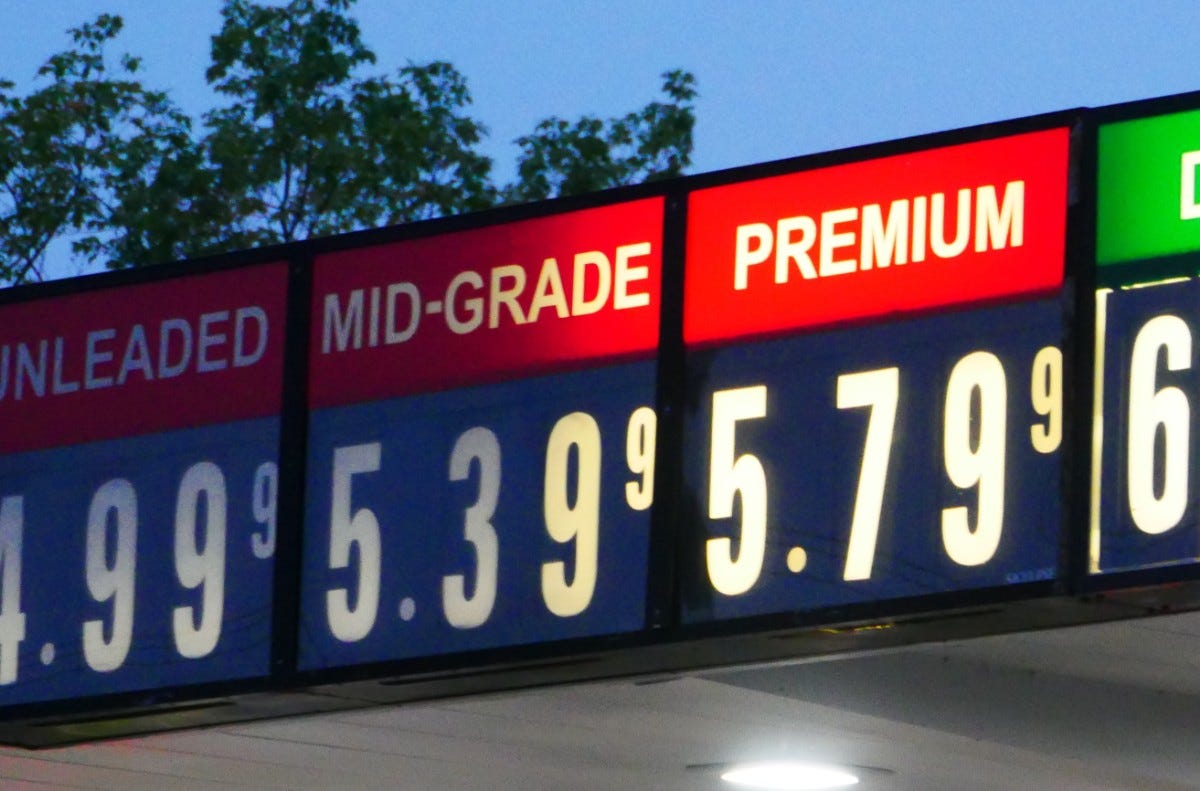
The Iran war is no longer only a foreign-policy story.
It has reached American wallets.
The latest Consumer Price Index shows annual inflation at 3.4 percent. Energy prices are up 16.3 percent from a year earlier and gasoline 27.4 percent.
That is still far below the 9.1 percent inflation peak recorded under President Biden in June 2022. But lower inflation does not mean lower prices. It means prices are rising more slowly.
On Sunday, OPEC+ kept its November production targets unchanged while Middle East disruptions continued to constrain supply. Brent crude remained above $100 a barrel.
For voters, geopolitics has acquired a price tag.
4. CAN THE POLLS BE TRUSTED?
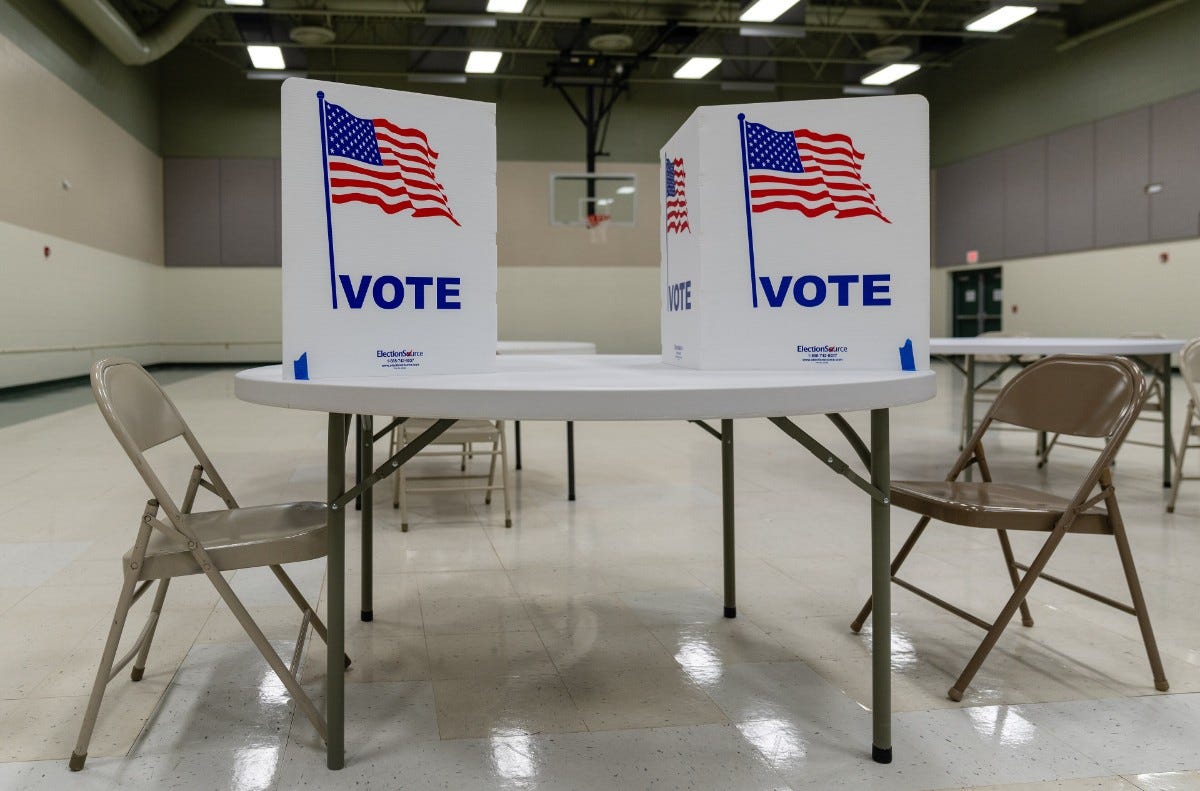
Polls are producing dramatic headlines. They require a less dramatic interpretation.
An AP-NORC survey found 38 percent of registered voters say Democrats would be better on the cost of living, compared with 27 percent who say Republicans would be better.
But the same survey found deep dissatisfaction with both parties. Only about two in ten voters believe either party is focused on helping people like them or can solve the country’s major problems.
Several Senate contests are being measured within or close to polling margins of error.
That distinction matters.
A poll measures a sample of voters at a particular moment.
It does not count ballots.
THE QUESTION FOR TOMORROW
If Americans change Congress, how much of Trump’s presidency will they change with it?
EDITORIAL
HANS IZAAK KRIEK • EDITOR-IN-CHIEF