

What Do Young Americans Know About 9/11?
Ask Americans of a certain age where they were on September 11, 2001, and many can tell you almost immediately.
They remember the images, the confusion and the realization that America was under attack.
But a generation has now grown up without that memory.
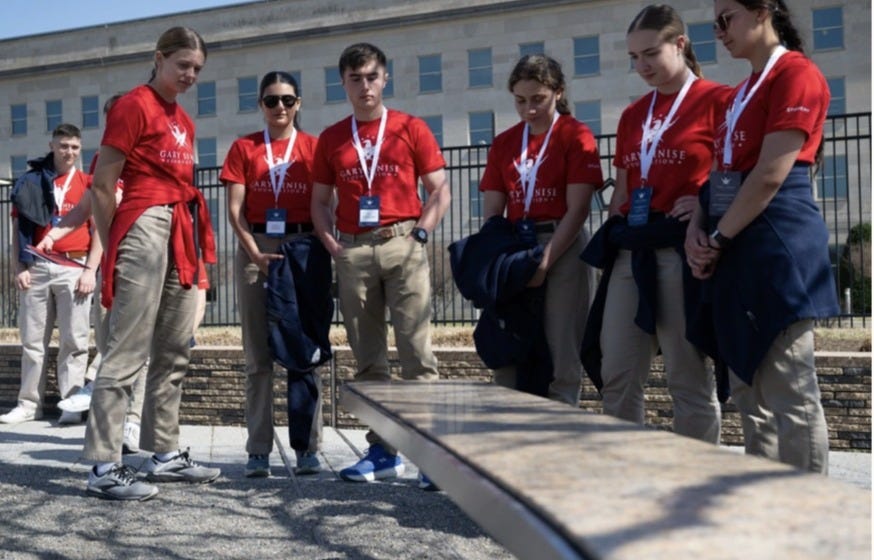
As the United States prepares to mark the 25th anniversary of 9/11, the National September 11 Memorial & Museum estimates that 100 million Americans were born after the attacks or were too young to remember them. Educating that generation is now a central part of the anniversary.
A new YouGov survey exposes the challenge. Only 15 percent of Americans under 30 say they remember where they were when they heard about the attacks. And 54 percent of Americans believe those born after 2001 generally do not have a good understanding of 9/11. Only 23 percent believe they do.
That matters because September 11 is not simply a chapter in an American history book.
The attacks changed airport security, intelligence, surveillance, foreign policy and America’s relationship with the Middle East. They led to wars whose consequences are still debated today.
And the terrorist threat did not disappear.
America’s intelligence community says al-Qaida and ISIS retain the intent to target the United States. But the most likely homeland scenario today involves U.S.-based lone offenders inspired by extremist ideology and propaganda.
The threat has changed. A future attack may not resemble September 11 at all.
For a generation with no memory of that morning, two questions remain: What happened on 9/11? And perhaps more importantly:
COULD IT HAPPEN AGAIN?
100 MILLION WITHOUT A MEMORY
One hundred million Americans were born after 9/11 or were too young to remember it.
The 9/11 Memorial & Museum is therefore putting a new generation at the center of this year’s commemoration, including a digital learning program built around firsthand accounts from a survivor, a first responder and relatives of victims.
REMEMBERING IS NO LONGER ENOUGH. AMERICA NOW HAS TO TEACH.
WHAT DO THEY ACTUALLY KNOW?
A new YouGov survey found that 54 percent of Americans believe people born after 2001 generally do not have a good understanding of the attacks.
Only 23 percent think they do.
Among Americans under 30, just 15 percent say they remember where they were when they heard about 9/11.
FOR A GENERATION, LIVED MEMORY HAS BECOME LEARNED HISTORY.
COULD IT HAPPEN AGAIN?
The terrorist threat has changed, but it has not vanished.
The 2026 U.S. intelligence assessment says al-Qaida and ISIS retain the intent to target America. The most likely homeland scenario, however, involves U.S.-based lone offenders inspired by extremist ideology and online propaganda.
The question is no longer simply whether another 9/11 could happen.
WHAT WOULD THE NEXT ATTACK LOOK LIKE?
THE THREAT HAS CHANGED
National security today extends far beyond hijacked aircraft.
Terrorist propaganda can reach individuals online, while hostile states and their proxies can use cyber operations against networks and critical infrastructure.
The lesson for a generation born after September 11 is uncomfortable:
HISTORY DOES NOT NECESSARILY REPEAT ITSELF IN THE SAME FORM.
BY THE NUMBERS
100 million: Americans are too young to remember September 11, 2001, roughly one-third of the nation.
THE QUESTION FOR TOMORROW
Twenty-five years after 9/11, do young Americans understand not only what happened, but why it could still matter to their future?
Every choice we make today shapes the world we will live in tomorrow.
IN FOCUS: WHEN MEMORY BECOMES HISTORY
On September 11, America will mark 25 years since the attacks. At the 9/11 Memorial, victims’ names will again be read aloud as the nation remembers those lost and reflects on a day that changed America.
JOIN TOMORROW’S JOURNAL
Independent journalism. Analysis beyond the headline.
kriekmedia.substack.com