As Secretary of State Marco Rubio urged Europe to strengthen its alliance with the United States this week, Washington was preparing another round of talks aimed at ending Russia’s war in Ukraine. On Friday, October 9, US envoys Steve Witkoff and Jared Kushner are due to meet Ukrainian representatives in Miami. NATO, meanwhile, is preparing to explain how it would defeat a Russian attack on allied territory.
The two efforts are not necessarily contradictory. Diplomacy seeks to prevent a wider war; deterrence prepares for the possibility that diplomacy fails. But their simultaneous timing raises a consequential question about what Washington and its European allies are preparing for.
In Athens on Wednesday, Rubio called for a stronger Western alliance grounded in national sovereignty, defense capability and shared interests. In Portugal on Thursday, he described the war in Ukraine as a dangerous stalemate and warned of the risk of wider regional escalation. He also defended US pressure on NATO members to increase military spending as a way to strengthen collective deterrence.
The diplomatic track is active. According to Reuters, the Miami discussions will address proposals for ending the war, Ukrainian security guarantees and postwar arrangements. Representatives of European partners and NATO are also expected to participate. The envoys are meeting Ukrainians in Florida, not traveling to Ukraine.
Yet NATO’s military planning is moving forward as well. Secretary-General Mark Rutte said on September 30 that there was no imminent threat to NATO territory. On October 12, Supreme Allied Commander Europe Gen. Alexus Grynkewich is expected to present a concept described as NATO’s “Theory of Victory” in Warsaw.
Accounts of the unclassified concept describe forward-deployed forces, drones, artificial intelligence and strikes against an attacker’s command-and-control networks. The stated scenario is defensive: NATO responds if attacked. The potentially explosive issue is whether disabling the machinery behind an invasion could require action beyond allied territory.
For Poland and the Baltic states, this is more than a planning exercise. Airspace incursions and drone incidents have already forced governments and NATO forces to make immediate decisions about detection, interception and the risk of escalation. A violation of airspace, however, is not automatically an armed attack under NATO’s collective-defense treaty.
President Donald Trump has also spoken of renewed contact with Vladimir Putin, but no completed new call has been established in the reporting reviewed for this edition. That distinction matters as Washington pursues negotiations while NATO prepares for a contingency it says it wants to deter.
The next test comes in two stages: diplomacy in Miami on October 9, and Grynkewich’s public explanation in Warsaw on October 12. Neither meeting alone will settle the fundamental question of how the alliance would respond if deterrence failed.
1. POLAND: THE FRONT LINE
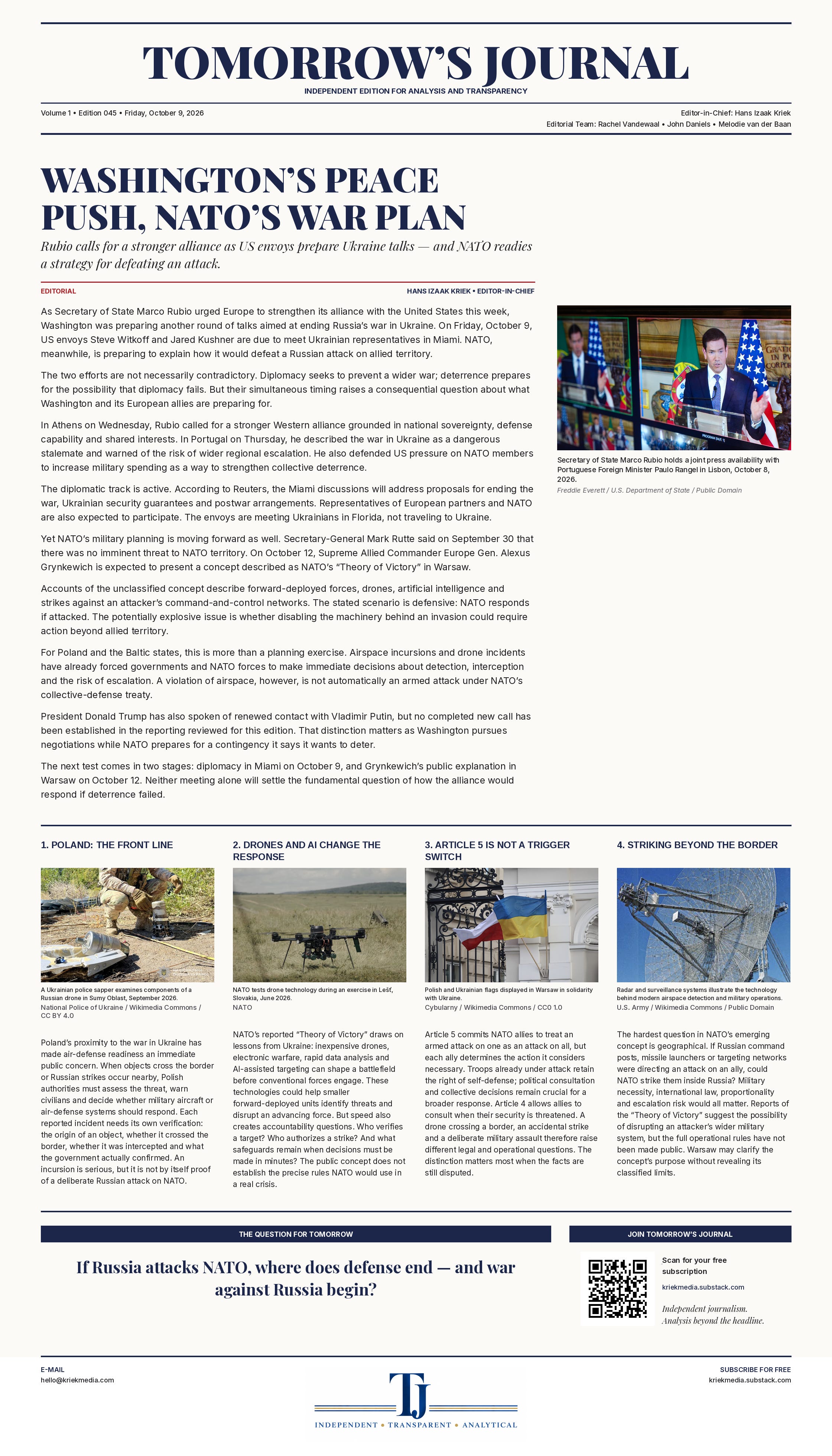
Poland’s proximity to the war in Ukraine has made air-defense readiness an immediate public concern. When objects cross the border or Russian strikes occur nearby, Polish authorities must assess the threat, warn civilians and decide whether military aircraft or air-defense systems should respond. Each reported incident needs its own verification: the origin of an object, whether it crossed the border, whether it was intercepted and what the government actually confirmed. An incursion is serious, but it is not by itself proof of a deliberate Russian attack on NATO.
2. DRONES AND AI CHANGE THE RESPONSE
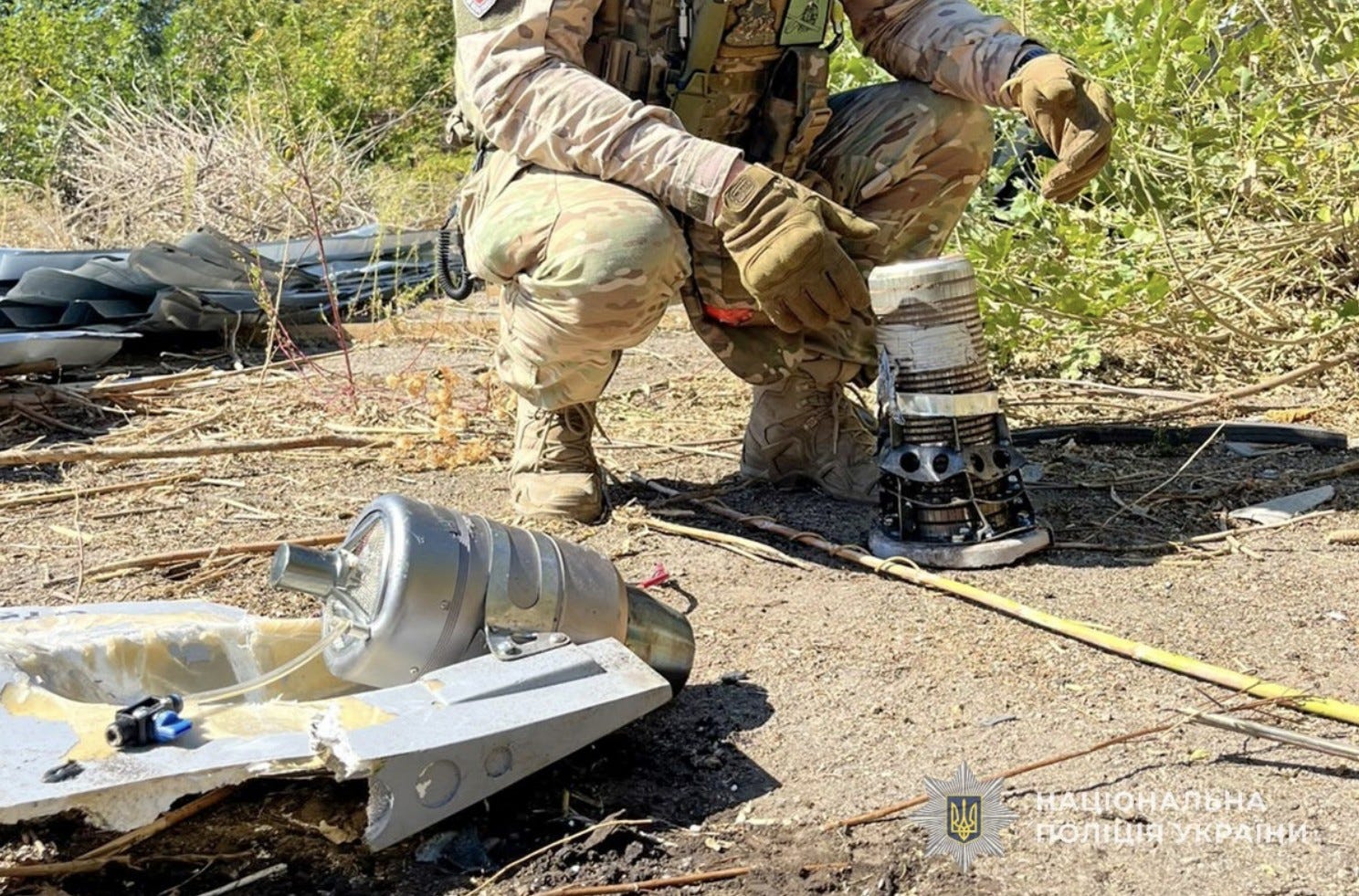
NATO’s reported “Theory of Victory” draws on lessons from Ukraine: inexpensive drones, electronic warfare, rapid data analysis and AI-assisted targeting can shape a battlefield before conventional forces engage. These technologies could help smaller forward-deployed units identify threats and disrupt an advancing force. But speed also creates accountability questions. Who verifies a target? Who authorizes a strike? And what safeguards remain when decisions must be made in minutes? The public concept does not establish the precise rules NATO would use in a real crisis.
3. ARTICLE 5 IS NOT A TRIGGER SWITCH
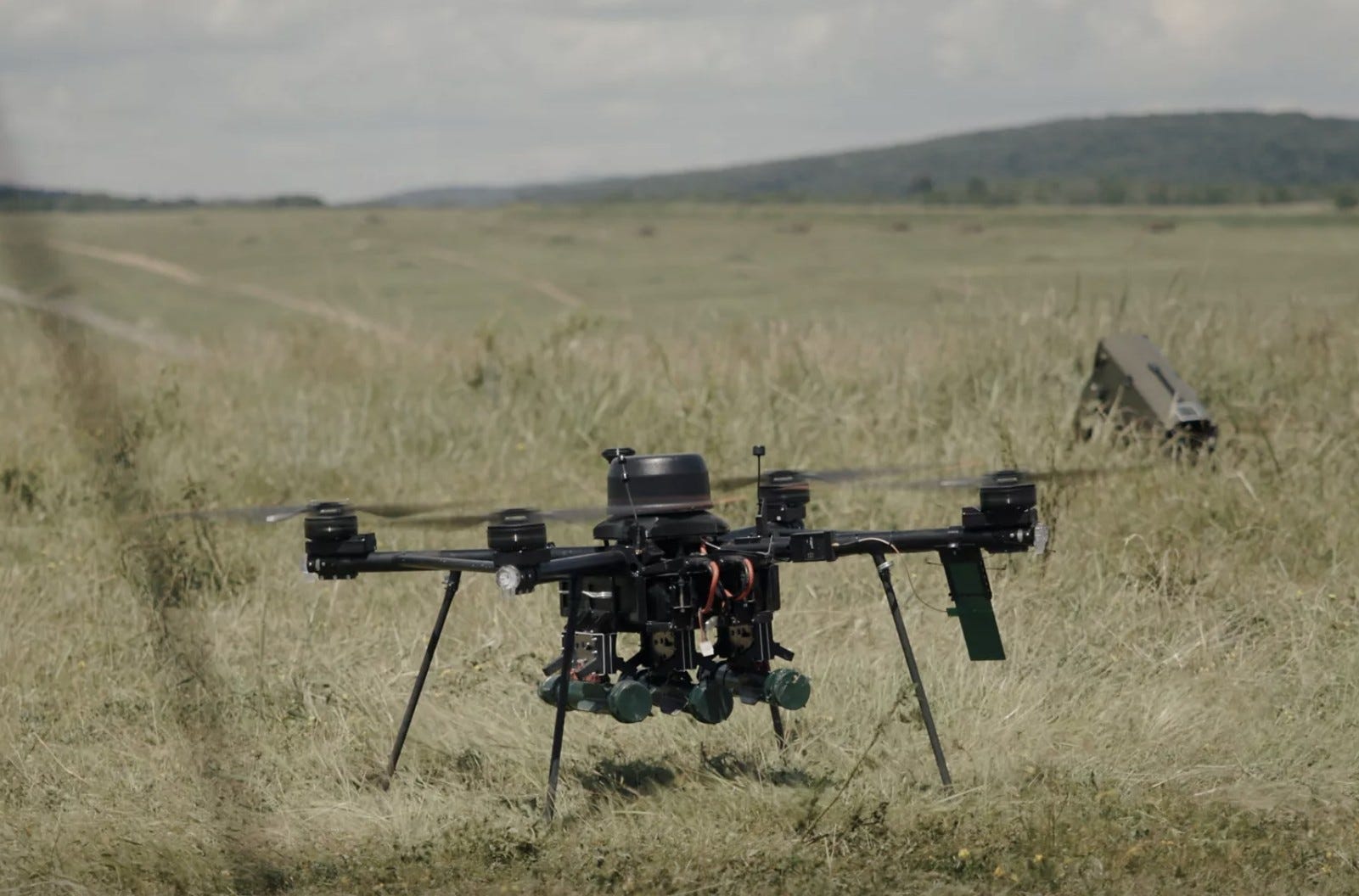
Article 5 commits NATO allies to treat an armed attack on one as an attack on all, but each ally determines the action it considers necessary. Troops already under attack retain the right of self-defense; political consultation and collective decisions remain crucial for a broader response. Article 4 allows allies to consult when their security is threatened. A drone crossing a border, an accidental strike and a deliberate military assault therefore raise different legal and operational questions. The distinction matters most when the facts are still disputed.
4. STRIKING BEYOND THE BORDER

The hardest question in NATO’s emerging concept is geographical. If Russian command posts, missile launchers or targeting networks were directing an attack on an ally, could NATO strike them inside Russia? Military necessity, international law, proportionality and escalation risk would all matter. Reports of the “Theory of Victory” suggest the possibility of disrupting an attacker’s wider military system, but the full operational rules have not been made public. Warsaw may clarify the concept’s purpose without revealing its classified limits.
THE QUESTION FOR TOMORROW
If Russia attacks NATO, where does defense end — and war against Russia begin?
EDITORIAL
HANS IZAAK KRIEK • EDITOR-IN-CHIEF