Americans are already voting. The narrow division of Congress means November 3 could reshape the president’s legislative agenda and the power to investigate his administration.
PALM BEACH COUNTY, FLORIDA — With twelve days remaining before the November 3 midterm elections, Americans are already casting ballots in a contest that will determine whether President Donald Trump retains Republican control of Congress for the final two years of his term.
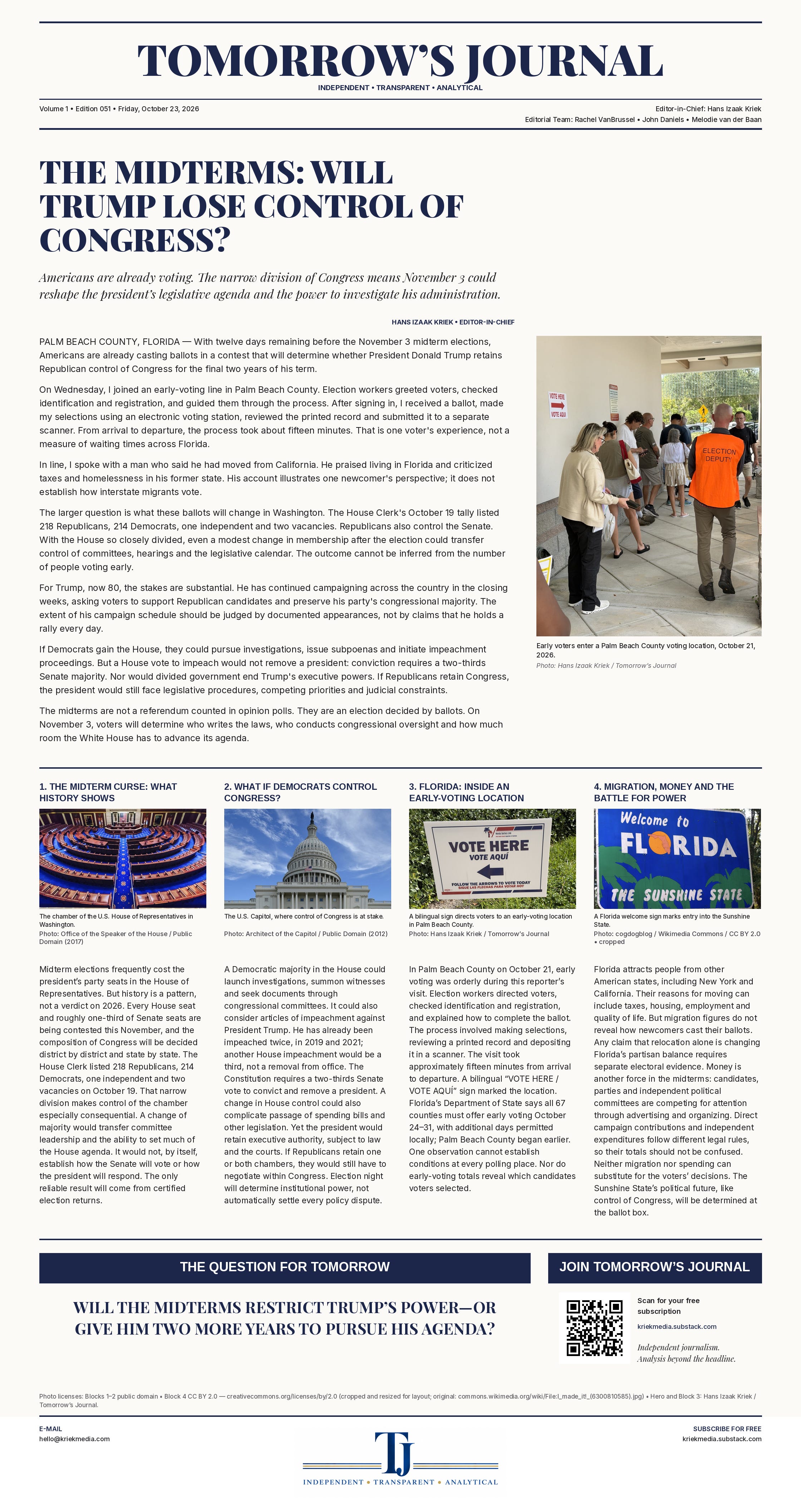
On Wednesday, I joined an early-voting line in Palm Beach County. Election workers greeted voters, checked identification and registration, and guided them through the process. After signing in, I received a ballot, made my selections using an electronic voting station, reviewed the printed record and submitted it to a separate scanner. From arrival to departure, the process took about fifteen minutes. That is one voter's experience, not a measure of waiting times across Florida.
In line, I spoke with a man who said he had moved from California. He praised living in Florida and criticized taxes and homelessness in his former state. His account illustrates one newcomer's perspective; it does not establish how interstate migrants vote.
The larger question is what these ballots will change in Washington. The House Clerk's October 19 tally listed 218 Republicans, 214 Democrats, one independent and two vacancies. Republicans also control the Senate. With the House so closely divided, even a modest change in membership after the election could transfer control of committees, hearings and the legislative calendar. The outcome cannot be inferred from the number of people voting early.
For Trump, now 80, the stakes are substantial. He has continued campaigning across the country in the closing weeks, asking voters to support Republican candidates and preserve his party's congressional majority. The extent of his campaign schedule should be judged by documented appearances, not by claims that he holds a rally every day.
If Democrats gain the House, they could pursue investigations, issue subpoenas and initiate impeachment proceedings. But a House vote to impeach would not remove a president: conviction requires a two-thirds Senate majority. Nor would divided government end Trump's executive powers. If Republicans retain Congress, the president would still face legislative procedures, competing priorities and judicial constraints.
The midterms are not a referendum counted in opinion polls. They are an election decided by ballots. On November 3, voters will determine who writes the laws, who conducts congressional oversight and how much room the White House has to advance its agenda.
1. THE MIDTERM CURSE: WHAT HISTORY SHOWS
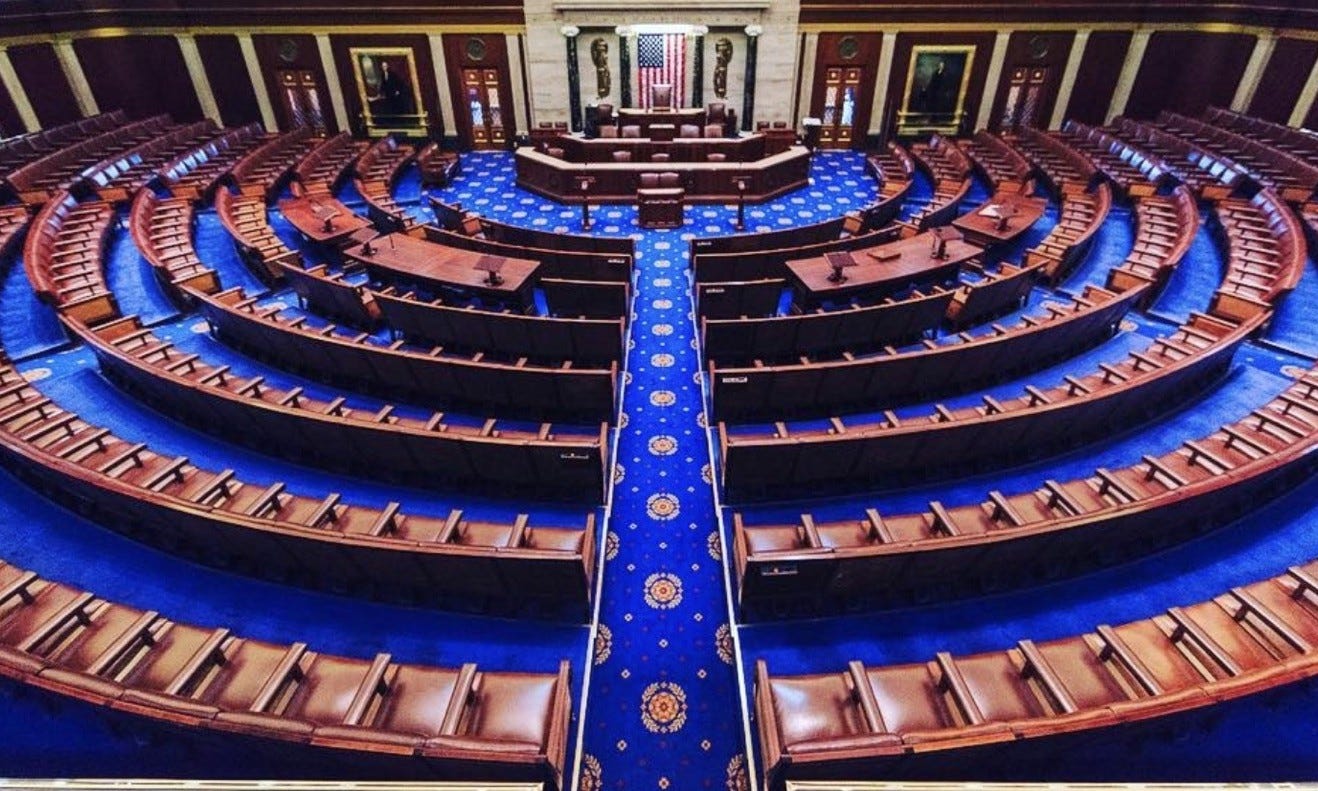

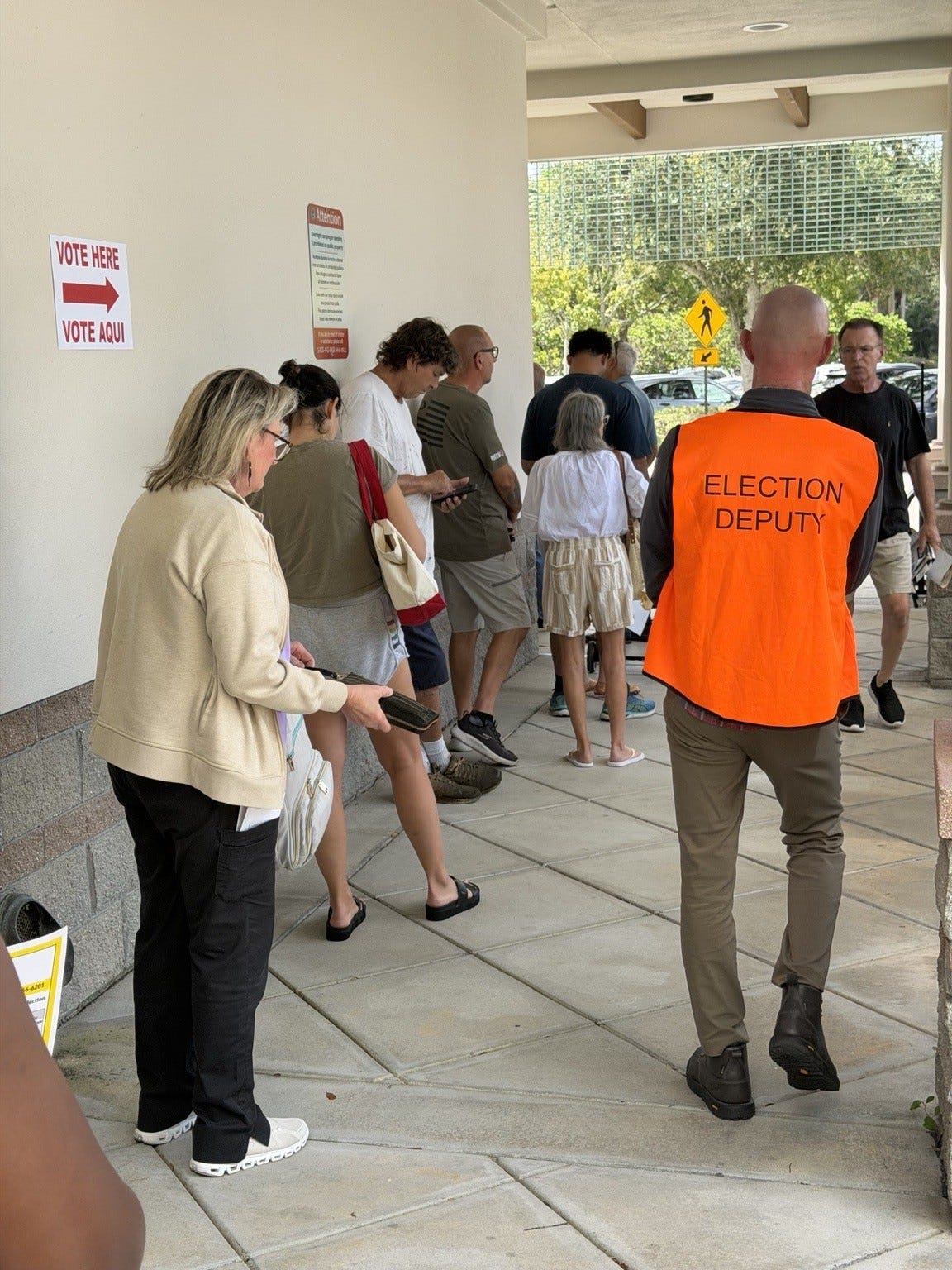
Midterm elections frequently cost the president’s party seats in the House of Representatives. But history is a pattern, not a verdict on 2026. Every House seat and roughly one-third of Senate seats are being contested this November, and the composition of Congress will be decided district by district and state by state. The House Clerk listed 218 Republicans, 214 Democrats, one independent and two vacancies on October 19. That narrow division makes control of the chamber especially consequential. A change of majority would transfer committee leadership and the ability to set much of the House agenda. It would not, by itself, establish how the Senate will vote or how the president will respond. The only reliable result will come from certified election returns.
2. WHAT IF DEMOCRATS CONTROL CONGRESS?
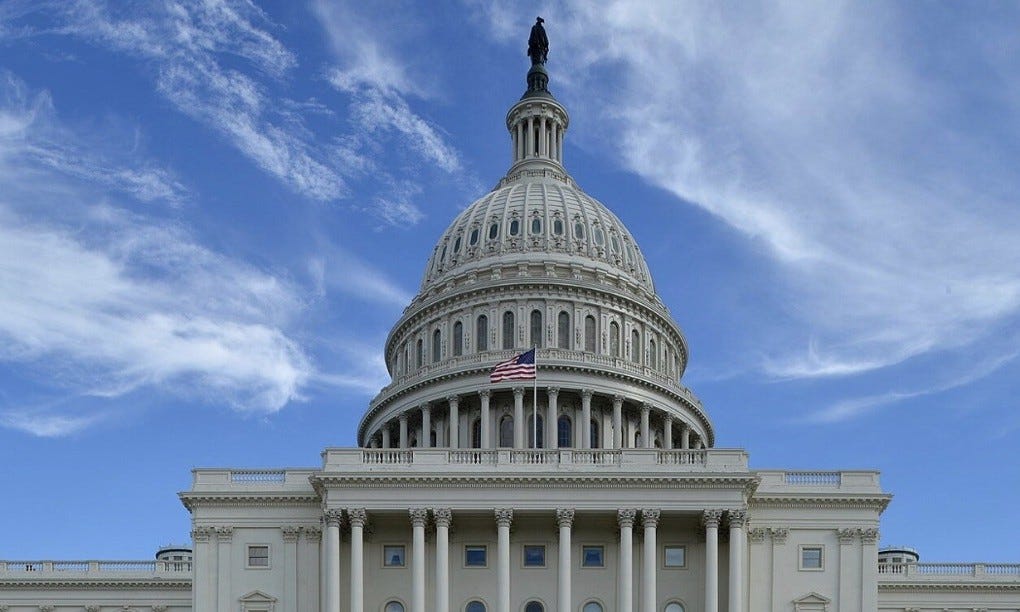
A Democratic majority in the House could launch investigations, summon witnesses and seek documents through congressional committees. It could also consider articles of impeachment against President Trump. He has already been impeached twice, in 2019 and 2021; another House impeachment would be a third, not a removal from office. The Constitution requires a two-thirds Senate vote to convict and remove a president. A change in House control could also complicate passage of spending bills and other legislation. Yet the president would retain executive authority, subject to law and the courts. If Republicans retain one or both chambers, they would still have to negotiate within Congress. Election night will determine institutional power, not automatically settle every policy dispute.
3. FLORIDA: INSIDE AN EARLY-VOTING LOCATION
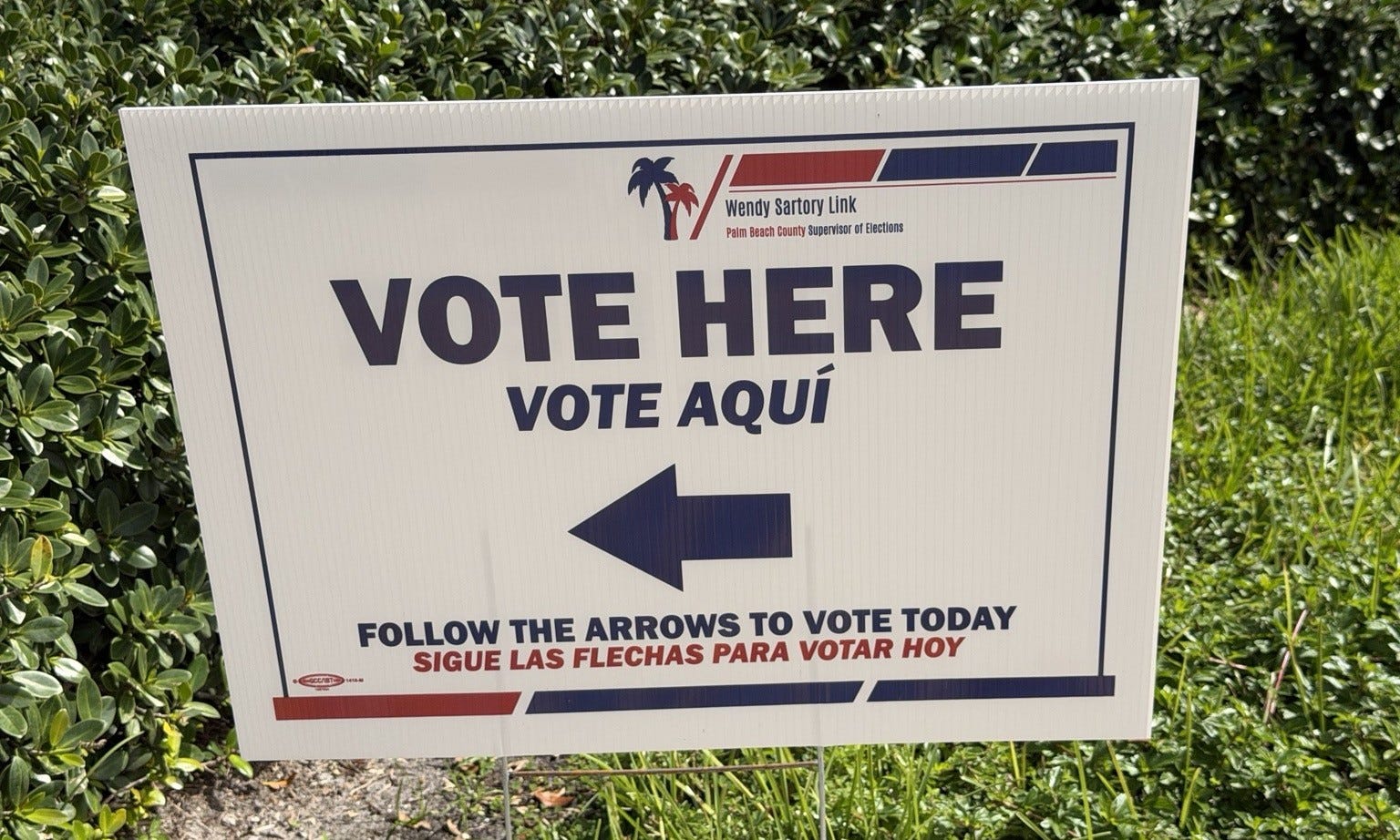
In Palm Beach County on October 21, early voting was orderly during this reporter’s visit. Election workers directed voters, checked identification and registration, and explained how to complete the ballot. The process involved making selections, reviewing a printed record and depositing it in a scanner. The visit took approximately fifteen minutes from arrival to departure. A bilingual “VOTE HERE / VOTE AQUÍ” sign marked the location. Florida’s Department of State says all 67 counties must offer early voting October 24–31, with additional days permitted locally; Palm Beach County began earlier. One observation cannot establish conditions at every polling place. Nor do early-voting totals reveal which candidates voters selected.
4. MIGRATION, MONEY AND THE BATTLE FOR POWER
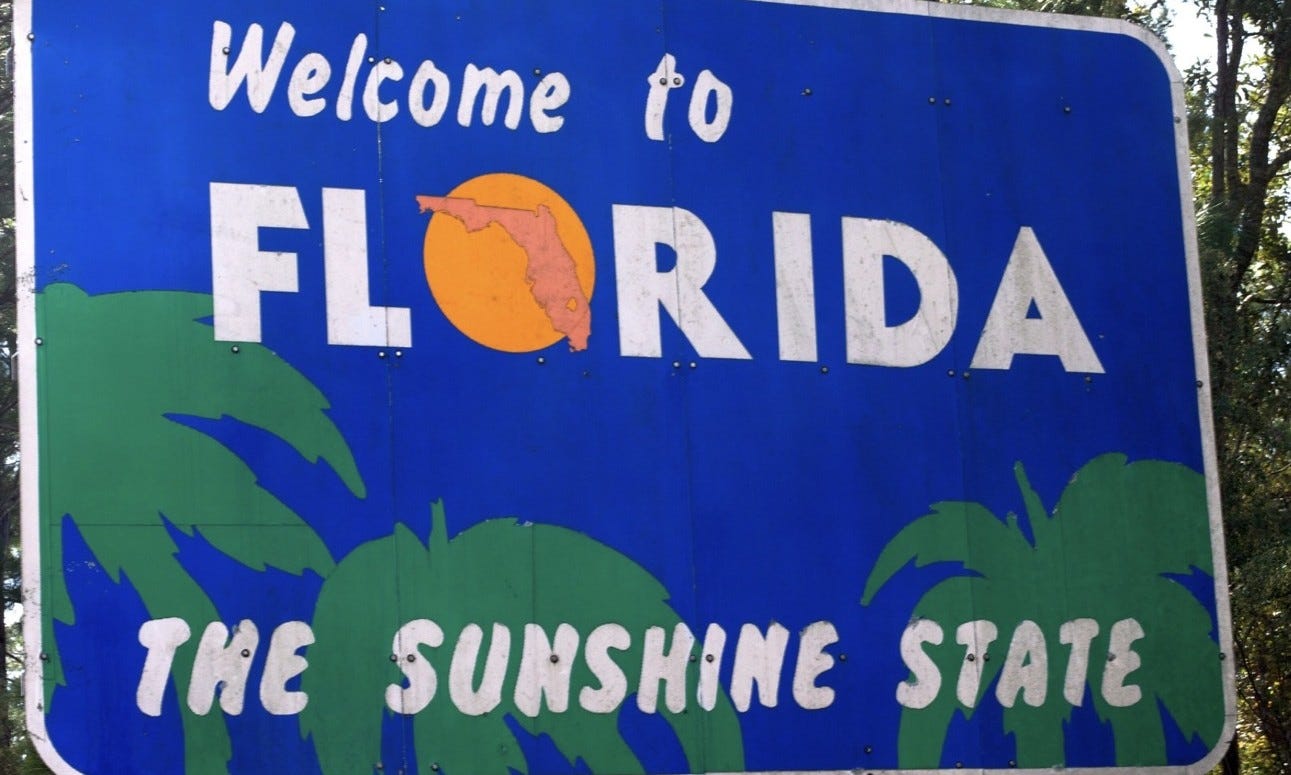

Florida attracts people from other American states, including New York and California. Their reasons for moving can include taxes, housing, employment and quality of life. But migration figures do not reveal how newcomers cast their ballots. Any claim that relocation alone is changing Florida’s partisan balance requires separate electoral evidence. Money is another force in the midterms: candidates, parties and independent political committees are competing for attention through advertising and organizing. Direct campaign contributions and independent expenditures follow different legal rules, so their totals should not be confused. Neither migration nor spending can substitute for the voters’ decisions. The Sunshine State’s political future, like control of Congress, will be determined at the ballot box.
THE QUESTION FOR TOMORROW
WILL THE MIDTERMS RESTRICT TRUMP’S POWER—OR GIVE HIM TWO MORE YEARS TO PURSUE HIS AGENDA?
HANS IZAAK KRIEK • EDITOR-IN-CHIEF