

The Future of Food
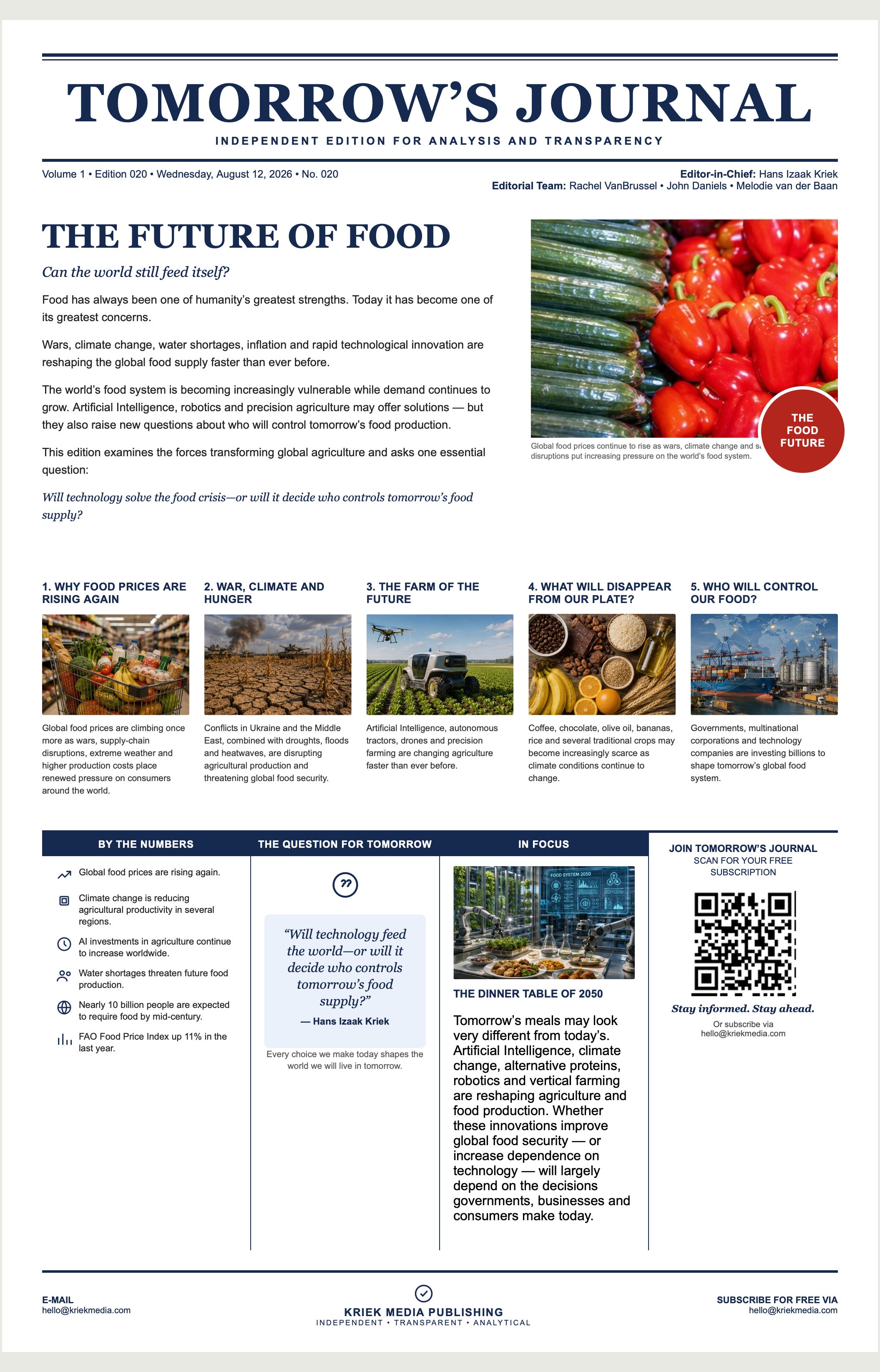
Food has always been one of humanity’s greatest strengths. Today it has become one of its greatest concerns.
Wars, climate change, water shortages, inflation and rapid technological innovation are reshaping the global food supply faster than ever before.
The world’s food system is becoming increasingly vulnerable while demand continues to grow. Artificial Intelligence, robotics and precision agriculture may offer solutions, but they also raise new questions about who will control tomorrow’s food production.
This edition examines the forces transforming global agriculture and asks one essential question:
Will technology solve the food crisis, or will it decide who controls tomorrow’s food supply?
Why Food Prices Are Rising Again
Global food prices are climbing once more as wars, supply-chain disruptions, extreme weather and higher production costs place renewed pressure on consumers around the world.
War, Climate and Hunger
Conflicts in Ukraine and the Middle East, combined with droughts, floods and heatwaves, are disrupting agricultural production and threatening global food security.
The Farm of the Future
Artificial Intelligence, autonomous tractors, drones and precision farming are changing agriculture faster than ever before.
What Will Disappear From Our Plate?
Coffee, chocolate, olive oil, bananas, rice and several traditional crops may become increasingly scarce as climate conditions continue to change.
Who Will Control Our Food?
Governments, multinational corporations and technology companies are investing billions to shape tomorrow’s global food system.
By the Numbers
Global food prices are rising again.
Climate change is reducing agricultural productivity in several regions.
AI investments in agriculture continue to increase worldwide.
Water shortages threaten future food production.
Nearly 10 billion people are expected to require food by mid-century.
FAO Food Price Index up 11% in the last year.
The Question for Tomorrow
“Will technology feed the world, or will it decide who controls tomorrow’s food supply?”
Hans Izaak Kriek
Every choice we make today shapes the world we will live in tomorrow.
The Dinner Table of 2050
Tomorrow’s meals may look very different from today’s. Artificial Intelligence, climate change, alternative proteins, robotics and vertical farming are reshaping agriculture and food production. Whether these innovations improve global food security, or increase dependence on technology, will largely depend on the decisions governments, businesses and consumers make today.