

The Battle for Congress
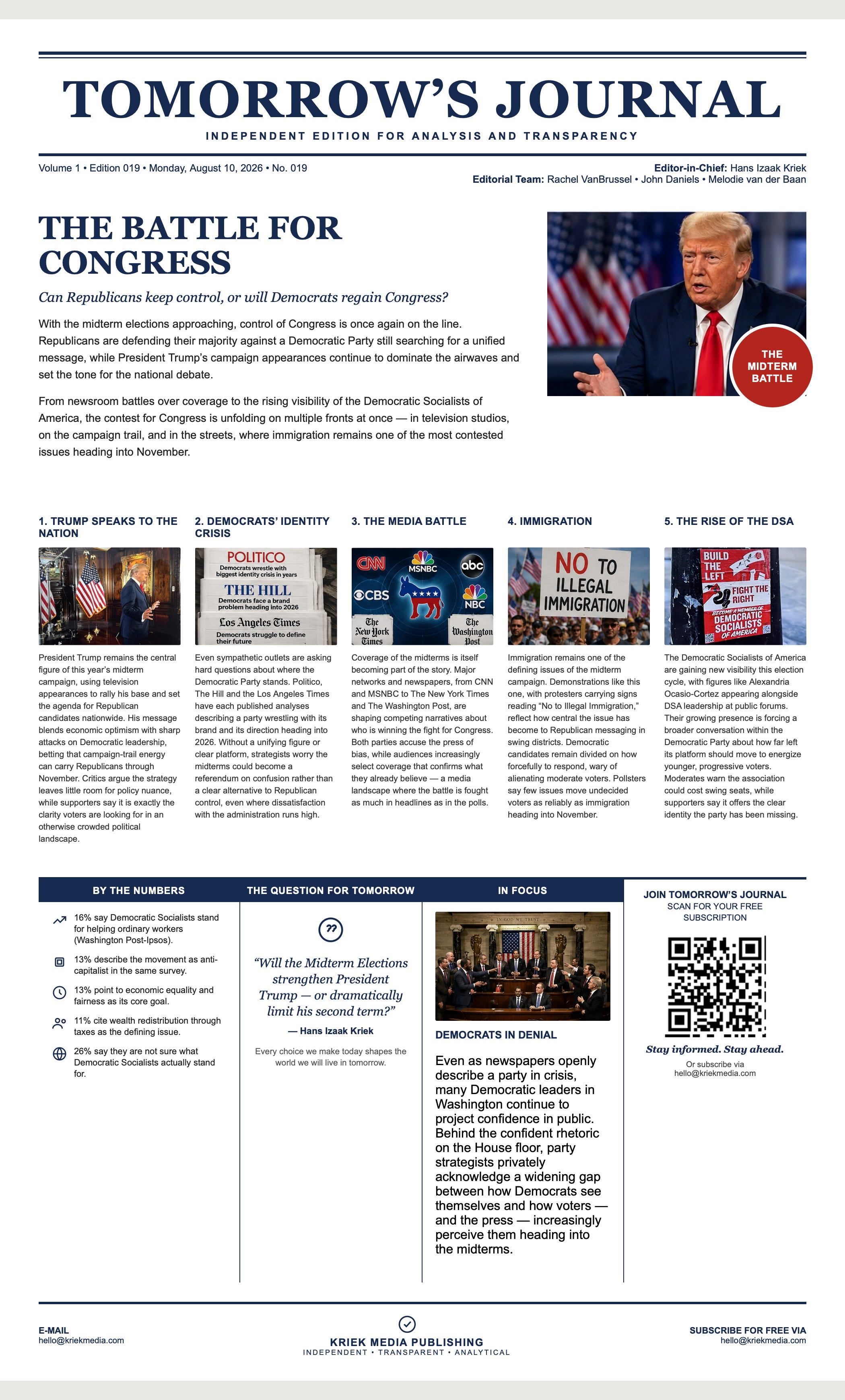
With the midterm elections approaching, control of Congress is once again on the line. Republicans are defending their majority against a Democratic Party still searching for a unified message, while President Trump’s campaign appearances continue to dominate the airwaves and set the tone for the national debate.
From newsroom battles over coverage to the rising visibility of the Democratic Socialists of America, the contest for Congress is unfolding on multiple fronts at once: in television studios, on the campaign trail, and in the streets, where immigration remains one of the most contested issues heading into November.
Trump Speaks to the Nation
President Trump remains the central figure of this year’s midterm campaign, using television appearances to rally his base and set the agenda for Republican candidates nationwide. His message blends economic optimism with sharp attacks on Democratic leadership, betting that campaign-trail energy can carry Republicans through November. Critics argue the strategy leaves little room for policy nuance, while supporters say it is exactly the clarity voters are looking for in an otherwise crowded political landscape.
Democrats’ Identity Crisis
Even sympathetic outlets are asking hard questions about where the Democratic Party stands. Politico, The Hill and the Los Angeles Times have each published analyses describing a party wrestling with its brand and its direction heading into 2026. Without a unifying figure or clear platform, strategists worry the midterms could become a referendum on confusion rather than a clear alternative to Republican control, even where dissatisfaction with the administration runs high.
The Media Battle
Coverage of the midterms is itself becoming part of the story. Major networks and newspapers, from CNN and MSNBC to The New York Times and The Washington Post, are shaping competing narratives about who is winning the fight for Congress. Both parties accuse the press of bias, while audiences increasingly select coverage that confirms what they already believe: a media landscape where the battle is fought as much in headlines as in the polls.
Immigration
Immigration remains one of the defining issues of the midterm campaign. Demonstrations like this one, with protesters carrying signs reading “No to Illegal Immigration,” reflect how central the issue has become to Republican messaging in swing districts. Democratic candidates remain divided on how forcefully to respond, wary of alienating moderate voters. Pollsters say few issues move undecided voters as reliably as immigration heading into November.
The Rise of the DSA
The Democratic Socialists of America are gaining new visibility this election cycle, with figures like Alexandria Ocasio-Cortez appearing alongside DSA leadership at public forums. Their growing presence is forcing a broader conversation within the Democratic Party about how far left its platform should move to energize younger, progressive voters. Moderates warn the association could cost swing seats, while supporters say it offers the clear identity the party has been missing.
By the Numbers
16% say Democratic Socialists stand for helping ordinary workers (Washington Post-Ipsos).
13% describe the movement as anti-capitalist in the same survey.
13% point to economic equality and fairness as its core goal.
11% cite wealth redistribution through taxes as the defining issue.
26% say they are not sure what Democratic Socialists actually stand for.
The Question for Tomorrow
“Will the Midterm Elections strengthen President Trump, or dramatically limit his second term?”
Hans Izaak Kriek
Every choice we make today shapes the world we will live in tomorrow.
Democrats in Denial
Even as newspapers openly describe a party in crisis, many Democratic leaders in Washington continue to project confidence in public. Behind the confident rhetoric on the House floor, party strategists privately acknowledge a widening gap between how Democrats see themselves and how voters, and the press, increasingly perceive them heading into the midterms.