Washington is tightening Iran’s financial isolation as diplomatic contacts continue and military warnings intensify.
Iran is facing an intensifying economic squeeze as Washington targets its oil shipments, financial intermediaries and remaining industrial revenue. But the central question is no longer purely economic: can pressure produce a negotiated settlement before another round of fighting begins?
On October 21, the U.S. Treasury announced sanctions against shipping agents, vessels and a law firm accused of facilitating Iranian trade. The action is part of Operation Economic Outcast, launched by Treasury Secretary Scott Bessent on August 24 to isolate Iran's financial and commercial networks. Earlier measures targeted the shadow tanker fleet, an Iraqi bank and industrial businesses. These are documented U.S. actions; claims that Iranian oil revenue has effectively disappeared are Washington's assessment, not an independently established total.
The military dimension is growing harder to separate from the economic campaign. On Sunday, October 25, President Donald Trump said the United States would not strike Iran that day. Iran, meanwhile, said messages were still passing through intermediaries. That is evidence of a diplomatic channel, not of an agreement. A proposal to ease restrictions on Iranian ports in exchange for reopening the Strait of Hormuz has not produced a publicly confirmed breakthrough.
Israel is also on alert. Prime Minister Benjamin Netanyahu warned that Iran or aligned groups might attempt attacks around Israel's October 27 election and threatened a severe response. Such warnings do not establish that an attack is imminent or that Israel has decided to strike first.
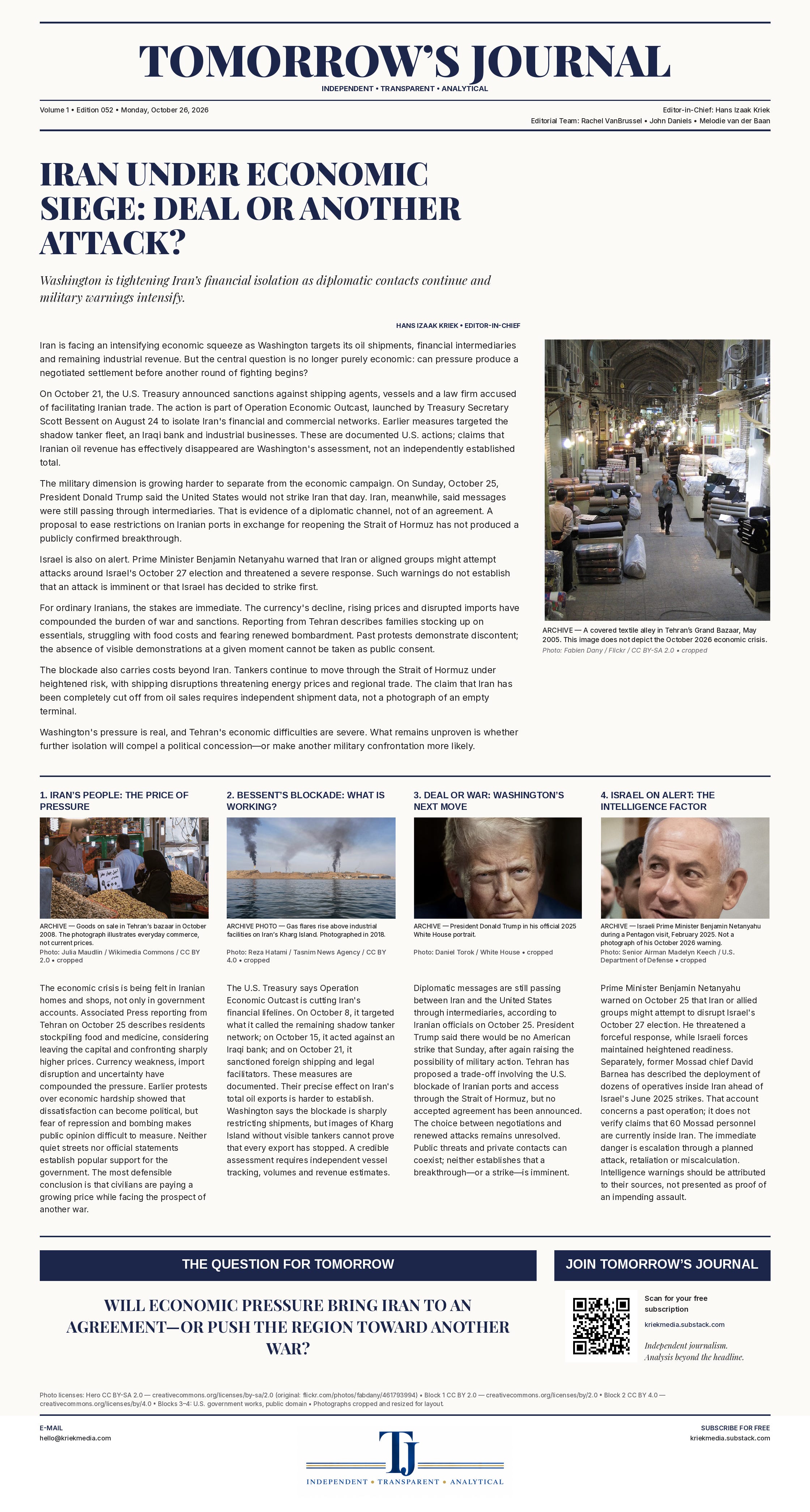
For ordinary Iranians, the stakes are immediate. The currency's decline, rising prices and disrupted imports have compounded the burden of war and sanctions. Reporting from Tehran describes families stocking up on essentials, struggling with food costs and fearing renewed bombardment. Past protests demonstrate discontent; the absence of visible demonstrations at a given moment cannot be taken as public consent.
The blockade also carries costs beyond Iran. Tankers continue to move through the Strait of Hormuz under heightened risk, with shipping disruptions threatening energy prices and regional trade. The claim that Iran has been completely cut off from oil sales requires independent shipment data, not a photograph of an empty terminal.
Washington's pressure is real, and Tehran's economic difficulties are severe. What remains unproven is whether further isolation will compel a political concession—or make another military confrontation more likely.
1. IRAN’S PEOPLE: THE PRICE OF PRESSURE


The economic crisis is being felt in Iranian homes and shops, not only in government accounts. Associated Press reporting from Tehran on October 25 describes residents stockpiling food and medicine, considering leaving the capital and confronting sharply higher prices. Currency weakness, import disruption and uncertainty have compounded the pressure. Earlier protests over economic hardship showed that dissatisfaction can become political, but fear of repression and bombing makes public opinion difficult to measure. Neither quiet streets nor official statements establish popular support for the government. The most defensible conclusion is that civilians are paying a growing price while facing the prospect of another war.
2. BESSENT’S BLOCKADE: WHAT IS WORKING?

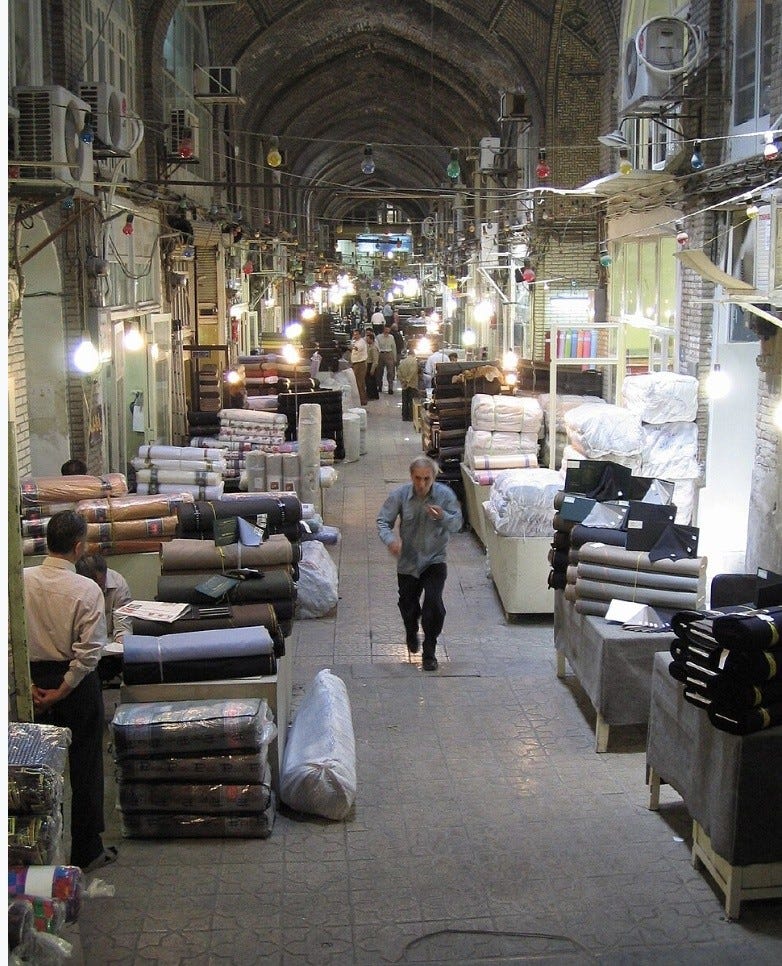
The U.S. Treasury says Operation Economic Outcast is cutting Iran's financial lifelines. On October 8, it targeted what it called the remaining shadow tanker network; on October 15, it acted against an Iraqi bank; and on October 21, it sanctioned foreign shipping and legal facilitators. These measures are documented. Their precise effect on Iran's total oil exports is harder to establish. Washington says the blockade is sharply restricting shipments, but images of Kharg Island without visible tankers cannot prove that every export has stopped. A credible assessment requires independent vessel tracking, volumes and revenue estimates.
3. DEAL OR WAR: WASHINGTON’S NEXT MOVE
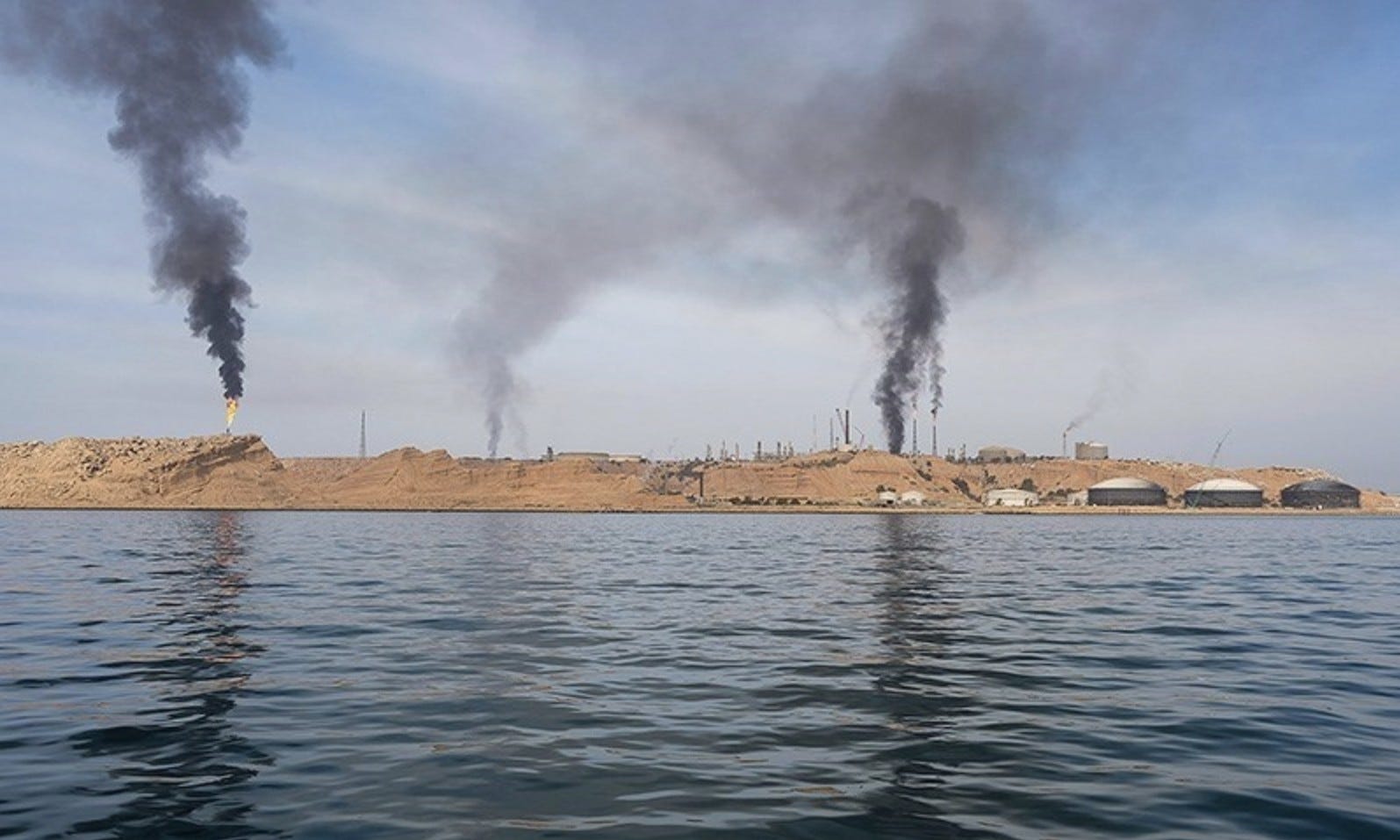
Diplomatic messages are still passing between Iran and the United States through intermediaries, according to Iranian officials on October 25. President Trump said there would be no American strike that Sunday, after again raising the possibility of military action. Tehran has proposed a trade-off involving the U.S. blockade of Iranian ports and access through the Strait of Hormuz, but no accepted agreement has been announced. The choice between negotiations and renewed attacks remains unresolved. Public threats and private contacts can coexist; neither establishes that a breakthrough—or a strike—is imminent.
4. ISRAEL ON ALERT: THE INTELLIGENCE FACTOR
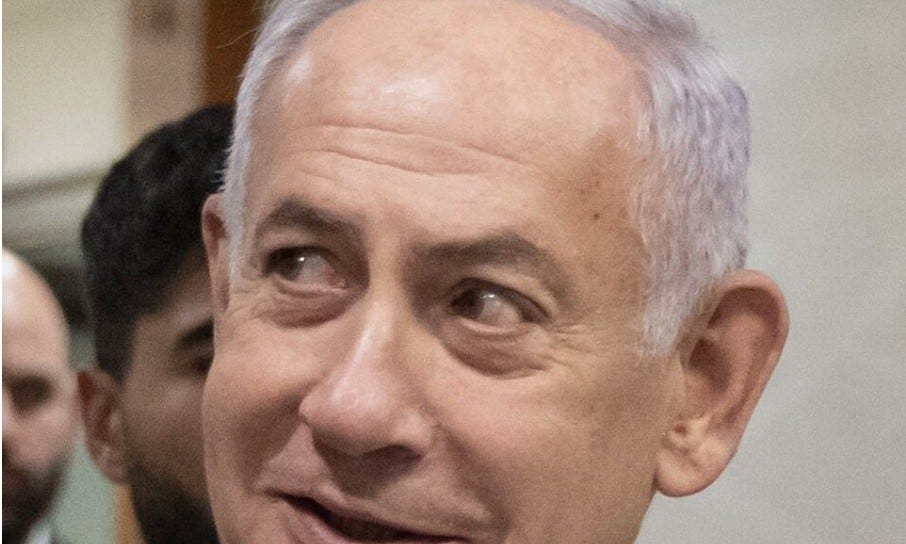
Prime Minister Benjamin Netanyahu warned on October 25 that Iran or allied groups might attempt to disrupt Israel's October 27 election. He threatened a forceful response, while Israeli forces maintained heightened readiness. Separately, former Mossad chief David Barnea has described the deployment of dozens of operatives inside Iran ahead of Israel's June 2025 strikes. That account concerns a past operation; it does not verify claims that 60 Mossad personnel are currently inside Iran. The immediate danger is escalation through a planned attack, retaliation or miscalculation. Intelligence warnings should be attributed to their sources, not presented as proof of an impending assault.
THE QUESTION FOR TOMORROW
WILL ECONOMIC PRESSURE BRING IRAN TO AN AGREEMENT—OR PUSH THE REGION TOWARD ANOTHER WAR?
HANS IZAAK KRIEK • EDITOR-IN-CHIEF