

Fentanyl Flood: America’s Deadliest Crisis Continues
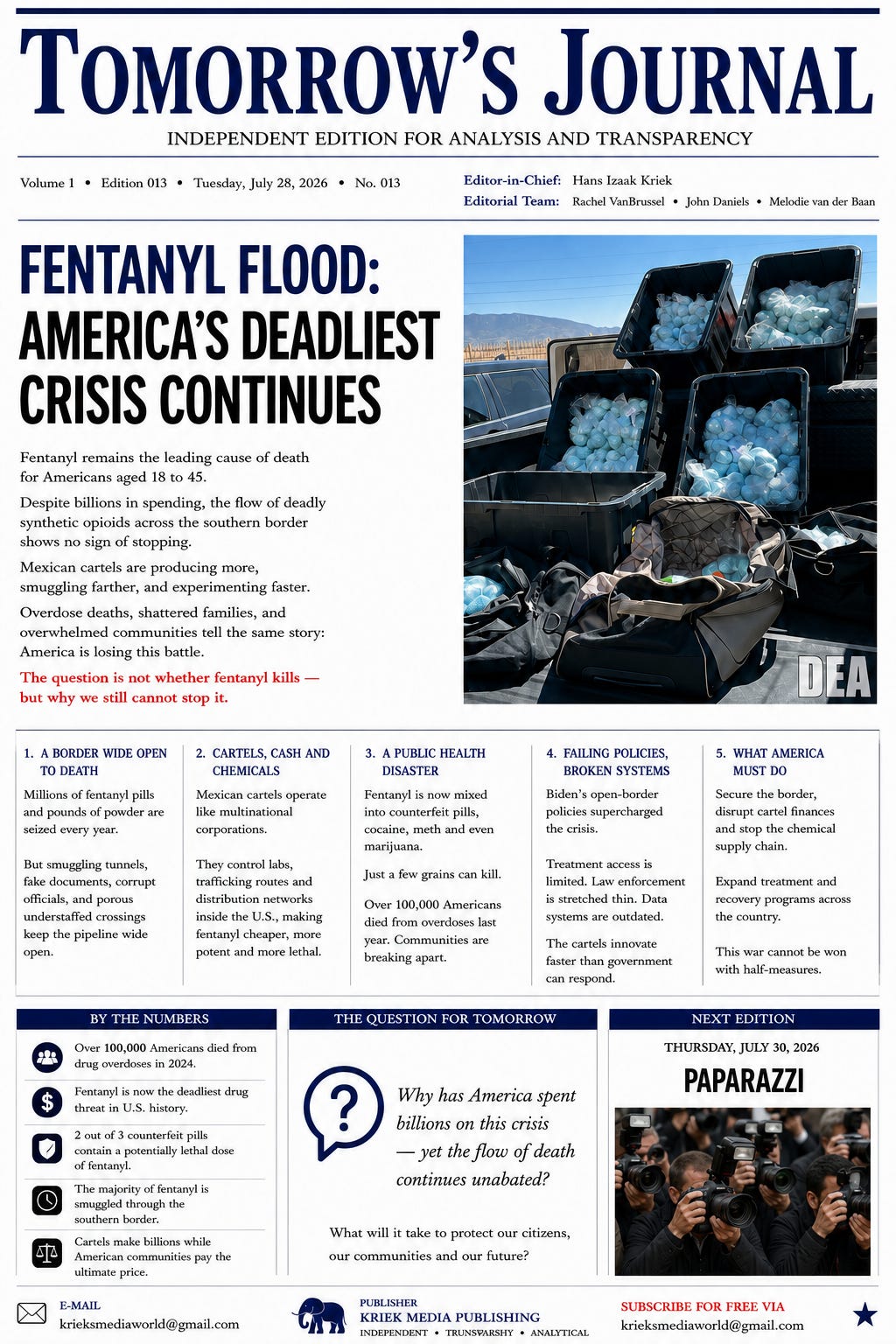
Fentanyl remains the leading cause of death for Americans aged 18 to 45. Despite billions in spending, the flow of deadly synthetic opioids across the southern border shows no sign of stopping.
Mexican cartels are producing more, smuggling farther, and experimenting faster. Overdose deaths, shattered families, and overwhelmed communities tell the same story: America is losing this battle.
The question is not whether fentanyl kills, but why we still cannot stop it.
A Border Wide Open to Death
Millions of fentanyl pills and pounds of powder are seized every year. But smuggling tunnels, fake documents, corrupt officials, and porous, understaffed crossings keep the pipeline wide open.
Cartels, Cash and Chemicals
Mexican cartels operate like multinational corporations. They control labs, trafficking routes and distribution networks inside the U.S., making fentanyl cheaper, more potent and more lethal.
A Public Health Disaster
Fentanyl is now mixed into counterfeit pills, cocaine, meth and even marijuana. Just a few grains can kill. Over 100,000 Americans died from overdoses last year. Communities are breaking apart.
Failing Policies, Broken Systems
Biden’s open-border policies supercharged the crisis. Treatment access is limited. Law enforcement is stretched thin. Data systems are outdated. The cartels innovate faster than government can respond.
What America Must Do
Secure the border, disrupt cartel finances and stop the chemical supply chain. Expand treatment and recovery programs across the country. This war cannot be won with half-measures.
BY THE NUMBERS
Over 100,000 Americans died from drug overdoses in 2024.
Fentanyl is now the deadliest drug threat in U.S. history.
2 out of 3 counterfeit pills contain a potentially lethal dose of fentanyl.
The majority of fentanyl is smuggled through the southern border.
Cartels make billions while American communities pay the ultimate price.
THE QUESTION FOR TOMORROW
“Why has America spent billions on this crisis, yet the flow of death continues unabated? What will it take to protect our citizens, our communities and our future?”
Hans Izaak Kriek