France struggles to contain protests and violence as unrest grips Albania. President Trump has brought the turmoil into the U.S. midterm campaign—but that does not mean the protests themselves are crossing the Atlantic.

Europe’s street protests have entered America’s election campaign. President Donald Trump has used unrest in France to warn U.S. voters about the consequences of electing Democrats. The political message has crossed the Atlantic; evidence of a coordinated protest movement doing the same has not emerged.
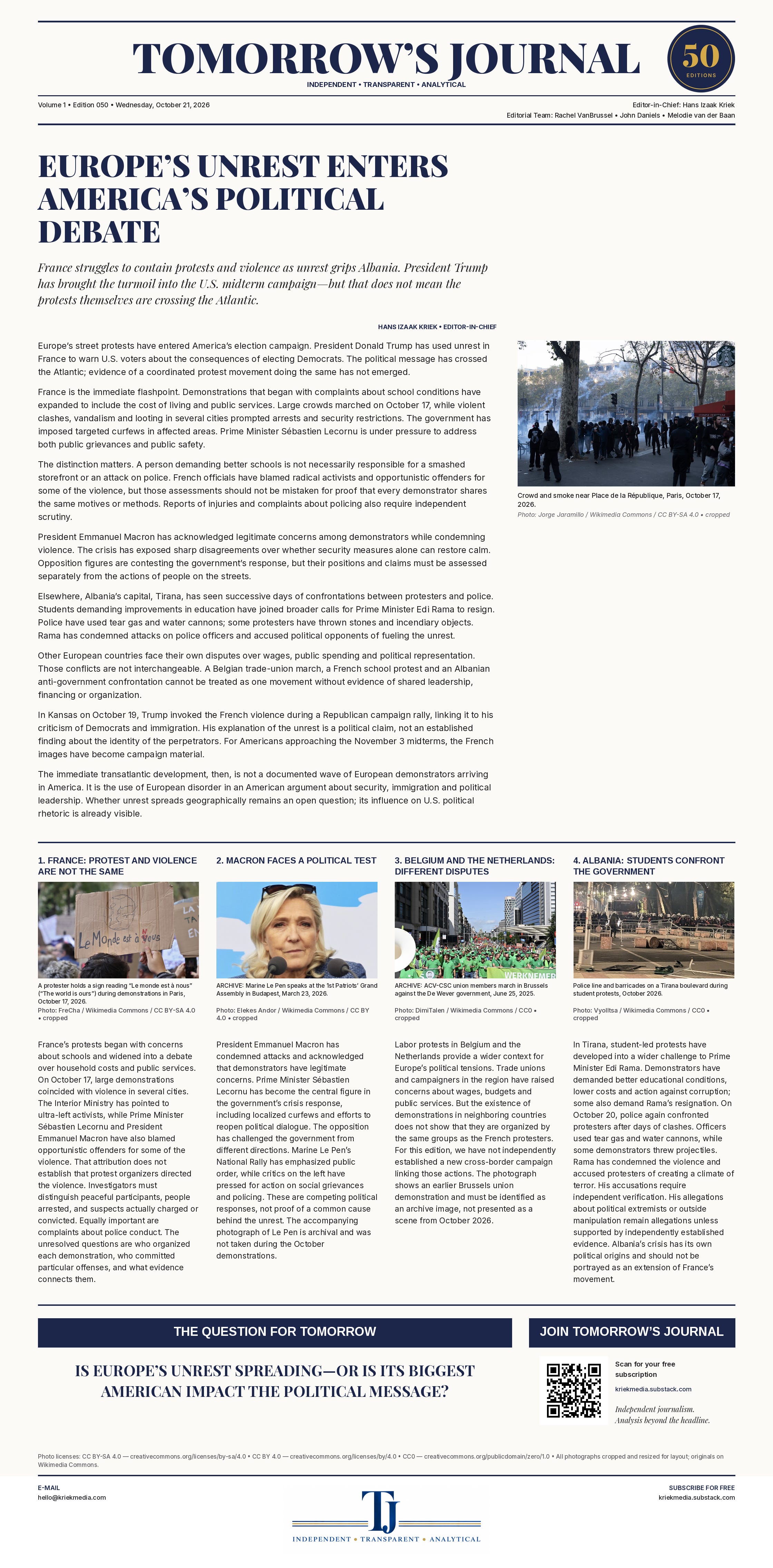
France is the immediate flashpoint. Demonstrations that began with complaints about school conditions have expanded to include the cost of living and public services. Large crowds marched on October 17, while violent clashes, vandalism and looting in several cities prompted arrests and security restrictions. The government has imposed targeted curfews in affected areas. Prime Minister Sébastien Lecornu is under pressure to address both public grievances and public safety.
The distinction matters. A person demanding better schools is not necessarily responsible for a smashed storefront or an attack on police. French officials have blamed radical activists and opportunistic offenders for some of the violence, but those assessments should not be mistaken for proof that every demonstrator shares the same motives or methods. Reports of injuries and complaints about policing also require independent scrutiny.
President Emmanuel Macron has acknowledged legitimate concerns among demonstrators while condemning violence. The crisis has exposed sharp disagreements over whether security measures alone can restore calm. Opposition figures are contesting the government’s response, but their positions and claims must be assessed separately from the actions of people on the streets.
Elsewhere, Albania’s capital, Tirana, has seen successive days of confrontations between protesters and police. Students demanding improvements in education have joined broader calls for Prime Minister Edi Rama to resign. Police have used tear gas and water cannons; some protesters have thrown stones and incendiary objects. Rama has condemned attacks on police officers and accused political opponents of fueling the unrest.
Other European countries face their own disputes over wages, public spending and political representation. Those conflicts are not interchangeable. A Belgian trade-union march, a French school protest and an Albanian anti-government confrontation cannot be treated as one movement without evidence of shared leadership, financing or organization.
In Kansas on October 19, Trump invoked the French violence during a Republican campaign rally, linking it to his criticism of Democrats and immigration. His explanation of the unrest is a political claim, not an established finding about the identity of the perpetrators. For Americans approaching the November 3 midterms, the French images have become campaign material.
The immediate transatlantic development, then, is not a documented wave of European demonstrators arriving in America. It is the use of European disorder in an American argument about security, immigration and political leadership. Whether unrest spreads geographically remains an open question; its influence on U.S. political rhetoric is already visible.
1. FRANCE: PROTEST AND VIOLENCE ARE NOT THE SAME

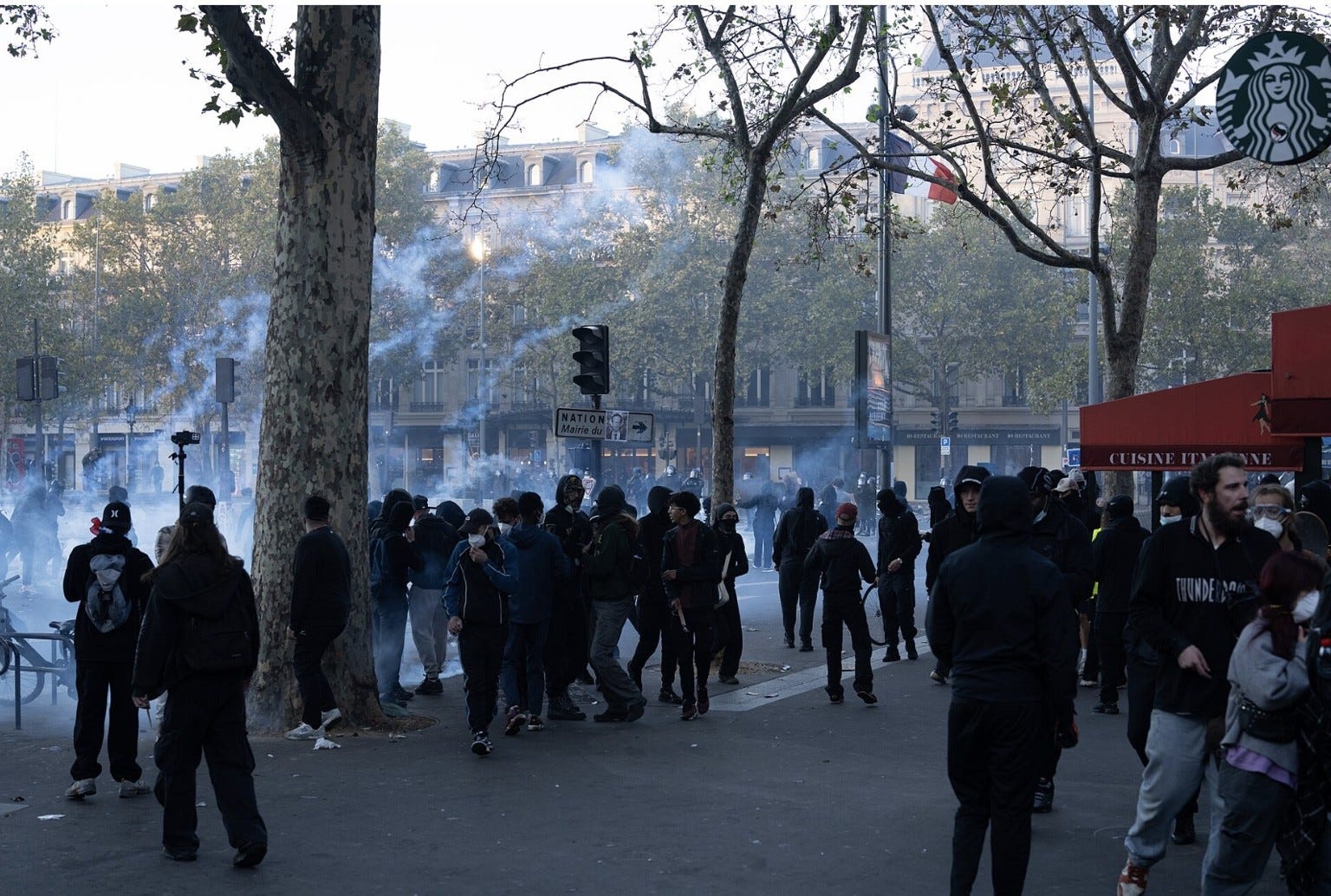
France’s protests began with concerns about schools and widened into a debate over household costs and public services. On October 17, large demonstrations coincided with violence in several cities. The Interior Ministry has pointed to ultra-left activists, while Prime Minister Sébastien Lecornu and President Emmanuel Macron have also blamed opportunistic offenders for some of the violence. That attribution does not establish that protest organizers directed the violence. Investigators must distinguish peaceful participants, people arrested, and suspects actually charged or convicted. Equally important are complaints about police conduct. The unresolved questions are who organized each demonstration, who committed particular offenses, and what evidence connects them.
2. MACRON FACES A POLITICAL TEST
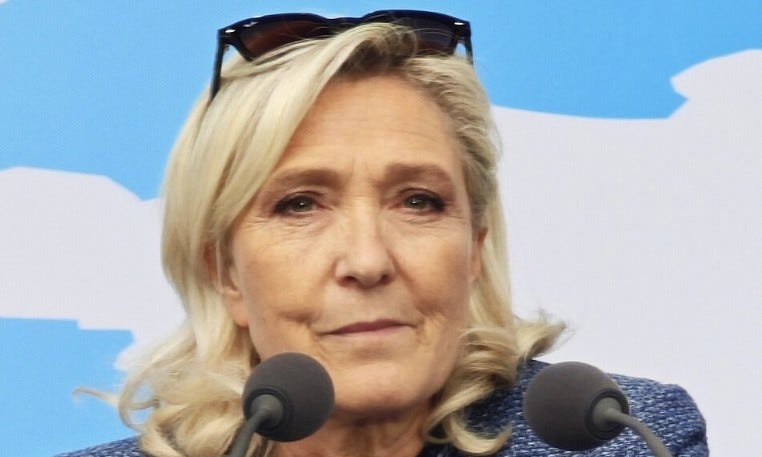

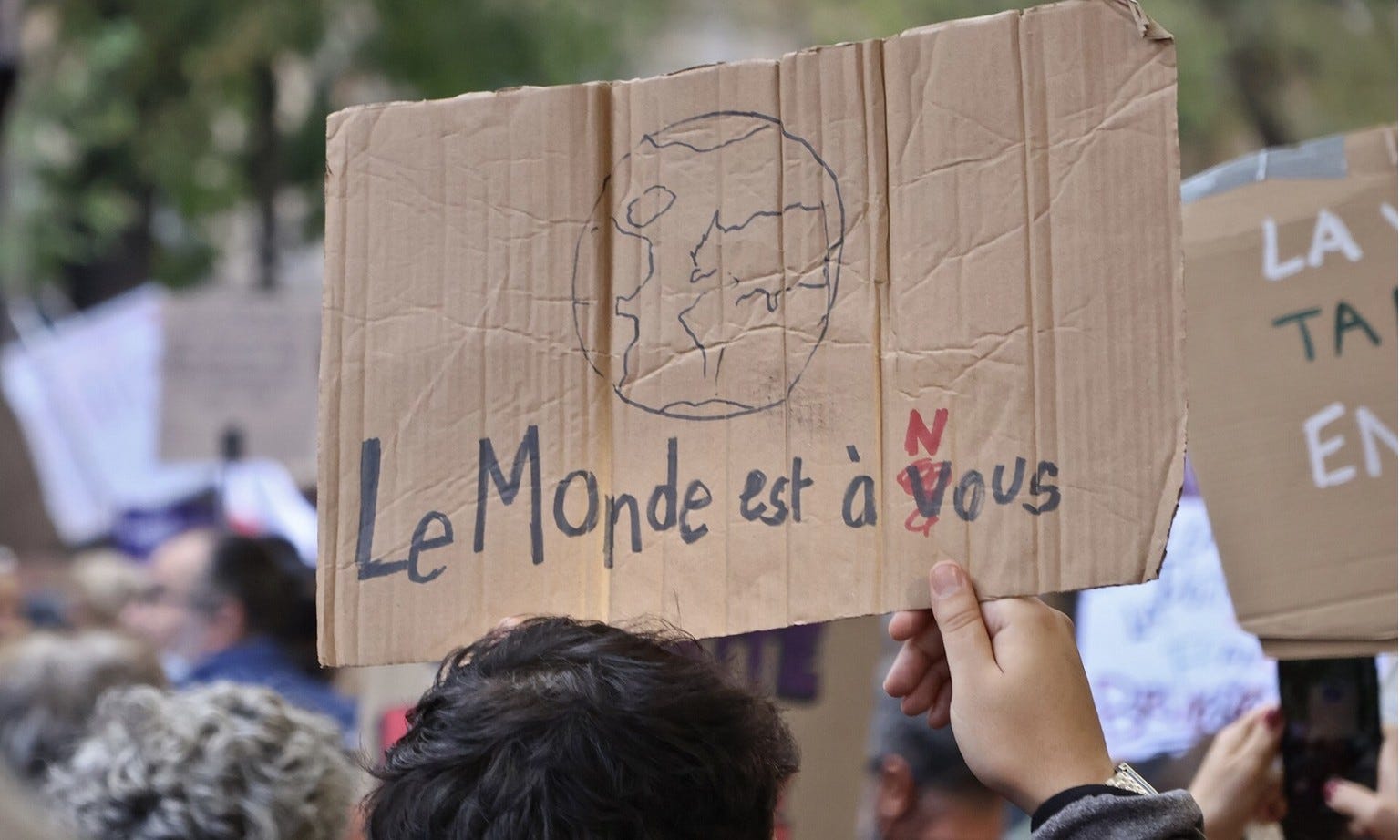
President Emmanuel Macron has condemned attacks and acknowledged that demonstrators have legitimate concerns. Prime Minister Sébastien Lecornu has become the central figure in the government’s crisis response, including localized curfews and efforts to reopen political dialogue. The opposition has challenged the government from different directions. Marine Le Pen’s National Rally has emphasized public order, while critics on the left have pressed for action on social grievances and policing. These are competing political responses, not proof of a common cause behind the unrest. The accompanying photograph of Le Pen is archival and was not taken during the October demonstrations.
3. BELGIUM AND THE NETHERLANDS: DIFFERENT DISPUTES
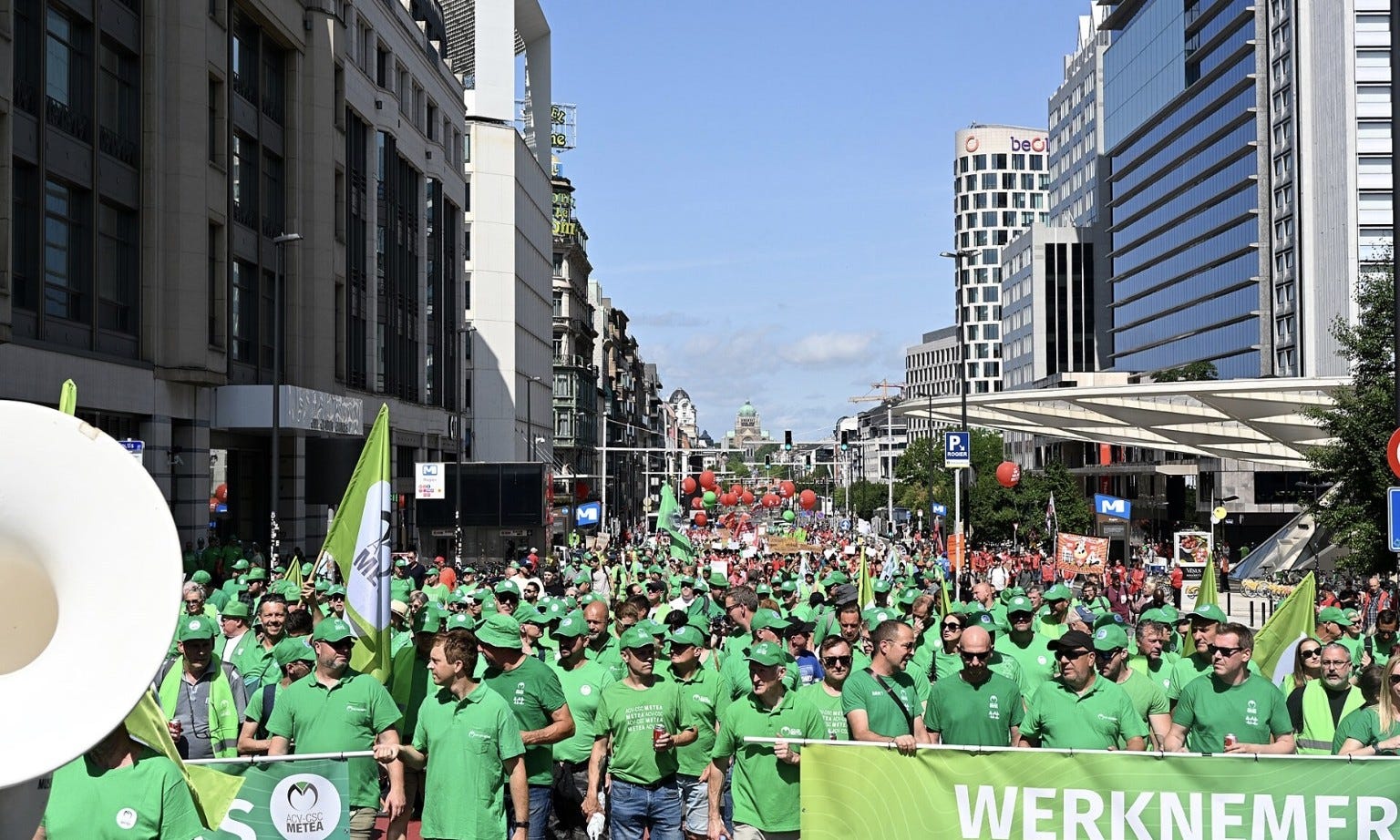

Labor protests in Belgium and the Netherlands provide a wider context for Europe’s political tensions. Trade unions and campaigners in the region have raised concerns about wages, budgets and public services. But the existence of demonstrations in neighboring countries does not show that they are organized by the same groups as the French protesters. For this edition, we have not independently established a new cross-border campaign linking those actions. The photograph shows an earlier Brussels union demonstration and must be identified as an archive image, not presented as a scene from October 2026.
4. ALBANIA: STUDENTS CONFRONT THE GOVERNMENT
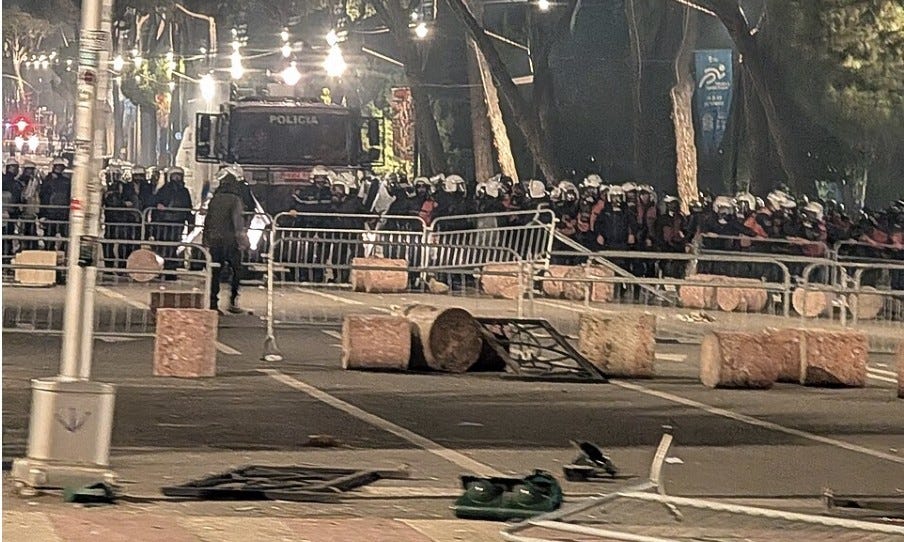

In Tirana, student-led protests have developed into a wider challenge to Prime Minister Edi Rama. Demonstrators have demanded better educational conditions, lower costs and action against corruption; some also demand Rama’s resignation. On October 20, police again confronted protesters after days of clashes. Officers used tear gas and water cannons, while some demonstrators threw projectiles. Rama has condemned the violence and accused protesters of creating a climate of terror. His accusations require independent verification. His allegations about political extremists or outside manipulation remain allegations unless supported by independently established evidence. Albania’s crisis has its own political origins and should not be portrayed as an extension of France’s movement.
THE QUESTION FOR TOMORROW
IS EUROPE’S UNREST SPREADING—OR IS ITS BIGGEST AMERICAN IMPACT THE POLITICAL MESSAGE?
HANS IZAAK KRIEK • EDITOR-IN-CHIEF