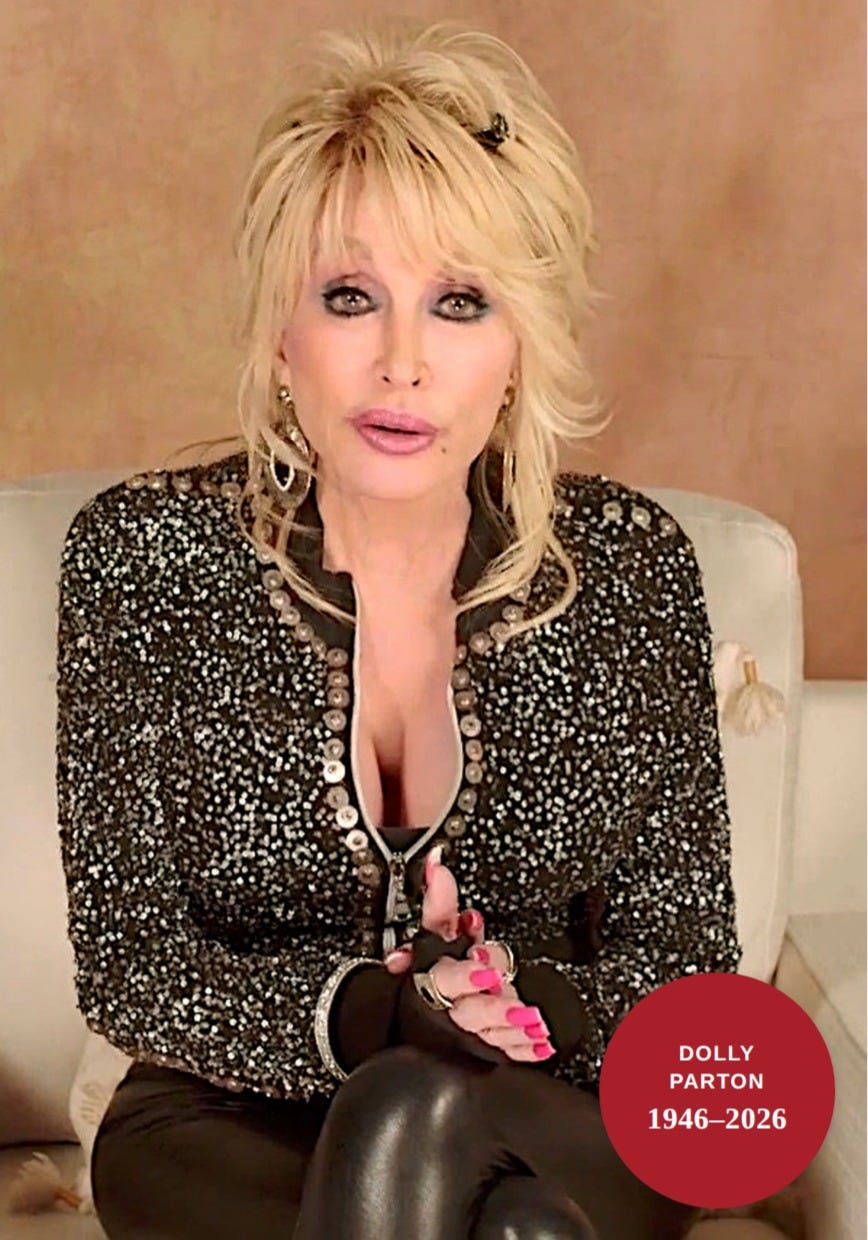
Dolly Parton: The America She Left Behind
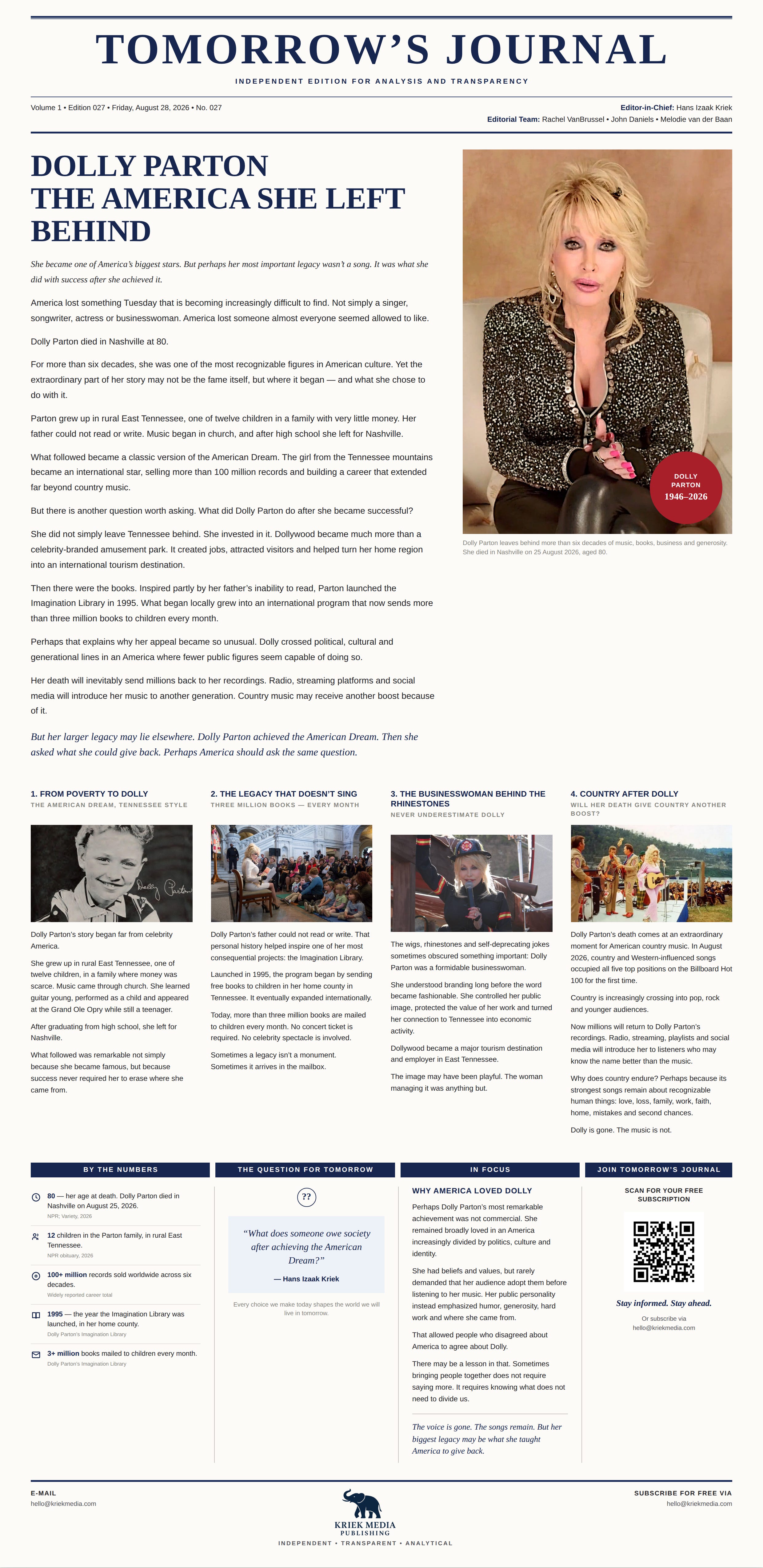
America lost something Tuesday that is becoming increasingly difficult to find. Not simply a singer, songwriter, actress or businesswoman. America lost someone almost everyone seemed allowed to like.
Dolly Parton died in Nashville at 80.
For more than six decades, she was one of the most recognizable figures in American culture. Yet the extraordinary part of her story may not be the fame itself, but where it began, and what she chose to do with it.
Parton grew up in rural East Tennessee, one of twelve children in a family with very little money. Her father could not read or write. Music began in church, and after high school she left for Nashville.
What followed became a classic version of the American Dream. The girl from the Tennessee mountains became an international star, selling more than 100 million records and building a career that extended far beyond country music.
But there is another question worth asking. What did Dolly Parton do after she became successful?
She did not simply leave Tennessee behind. She invested in it. Dollywood became much more than a celebrity-branded amusement park. It created jobs, attracted visitors and helped turn her home region into an international tourism destination.
Then there were the books. Inspired partly by her father’s inability to read, Parton launched the Imagination Library in 1995. What began locally grew into an international program that now sends more than three million books to children every month.
Perhaps that explains why her appeal became so unusual. Dolly crossed political, cultural and generational lines in an America where fewer public figures seem capable of doing so.
Her death will inevitably send millions back to her recordings. Radio, streaming platforms and social media will introduce her music to another generation. Country music may receive another boost because of it.
But her larger legacy may lie elsewhere. Dolly Parton achieved the American Dream. Then she asked what she could give back. Perhaps America should ask the same question.
From Poverty to Dolly
The American Dream, Tennessee Style
Dolly Parton’s story began far from celebrity America.
She grew up in rural East Tennessee, one of twelve children, in a family where money was scarce. Music came through church. She learned guitar young, performed as a child and appeared at the Grand Ole Opry while still a teenager.
After graduating from high school, she left for Nashville.
What followed was remarkable not simply because she became famous, but because success never required her to erase where she came from.
The Legacy That Doesn’t Sing
Three Million Books, Every Month
Dolly Parton’s father could not read or write. That personal history helped inspire one of her most consequential projects: the Imagination Library.
Launched in 1995, the program began by sending free books to children in her home county in Tennessee. It eventually expanded internationally.
Today, more than three million books are mailed to children every month. No concert ticket is required. No celebrity spectacle is involved.
Sometimes a legacy isn’t a monument. Sometimes it arrives in the mailbox.
The Businesswoman Behind the Rhinestones
Never Underestimate Dolly
The wigs, rhinestones and self-deprecating jokes sometimes obscured something important: Dolly Parton was a formidable businesswoman.
She understood branding long before the term became fashionable. She controlled her public image, protected the value of her work and turned her connection to Tennessee into economic activity.
Dollywood became a major tourism destination and employer in East Tennessee.
The image may have been playful. The woman managing it was anything but.
Country After Dolly
Will Her Death Give Country Another Boost?
Dolly Parton’s death comes at an extraordinary moment for American country music. In August 2026, country and Western-influenced songs occupied all five top positions on the Billboard Hot 100 for the first time.
Country is increasingly crossing into pop, rock and younger audiences.
Now millions will return to Dolly Parton’s recordings. Radio, streaming, playlists and social media will introduce her to listeners who may know the name better than the music.
Why does country endure? Perhaps because its strongest songs remain about recognizable human things: love, loss, family, work, faith, home, mistakes and second chances.
Dolly is gone. The music is not.
By the Numbers
80: Her age at death. Dolly Parton died in Nashville on August 25, 2026.
12 children in the Parton family, in rural East Tennessee.
100+ million records sold worldwide across six decades.
1995: The year the Imagination Library was launched, in her home county.
3+ million books mailed to children every month.
The Question for Tomorrow
“What does someone owe society after achieving the American Dream?”
Hans Izaak Kriek
Every choice we make today shapes the world we will live in tomorrow.
In Focus: Why America Loved Dolly
Perhaps Dolly Parton’s most remarkable achievement was not commercial. She remained broadly loved in an America increasingly divided by politics, culture and identity.
She had beliefs and values, but rarely demanded that her audience adopt them before listening to her music. Her public personality instead emphasized humor, generosity, hard work and where she came from.
That allowed people who disagreed about America to agree about Dolly.
There may be a lesson in that. Sometimes bringing people together does not require saying more. It requires knowing what does not need to divide us.
The voice is gone. The songs remain. But her biggest legacy may be what she taught America to give back.
Stay informed. Stay ahead.
hello@kriekmedia.com
Hans Izaak Kriek