

America: The Great Migration Reversal
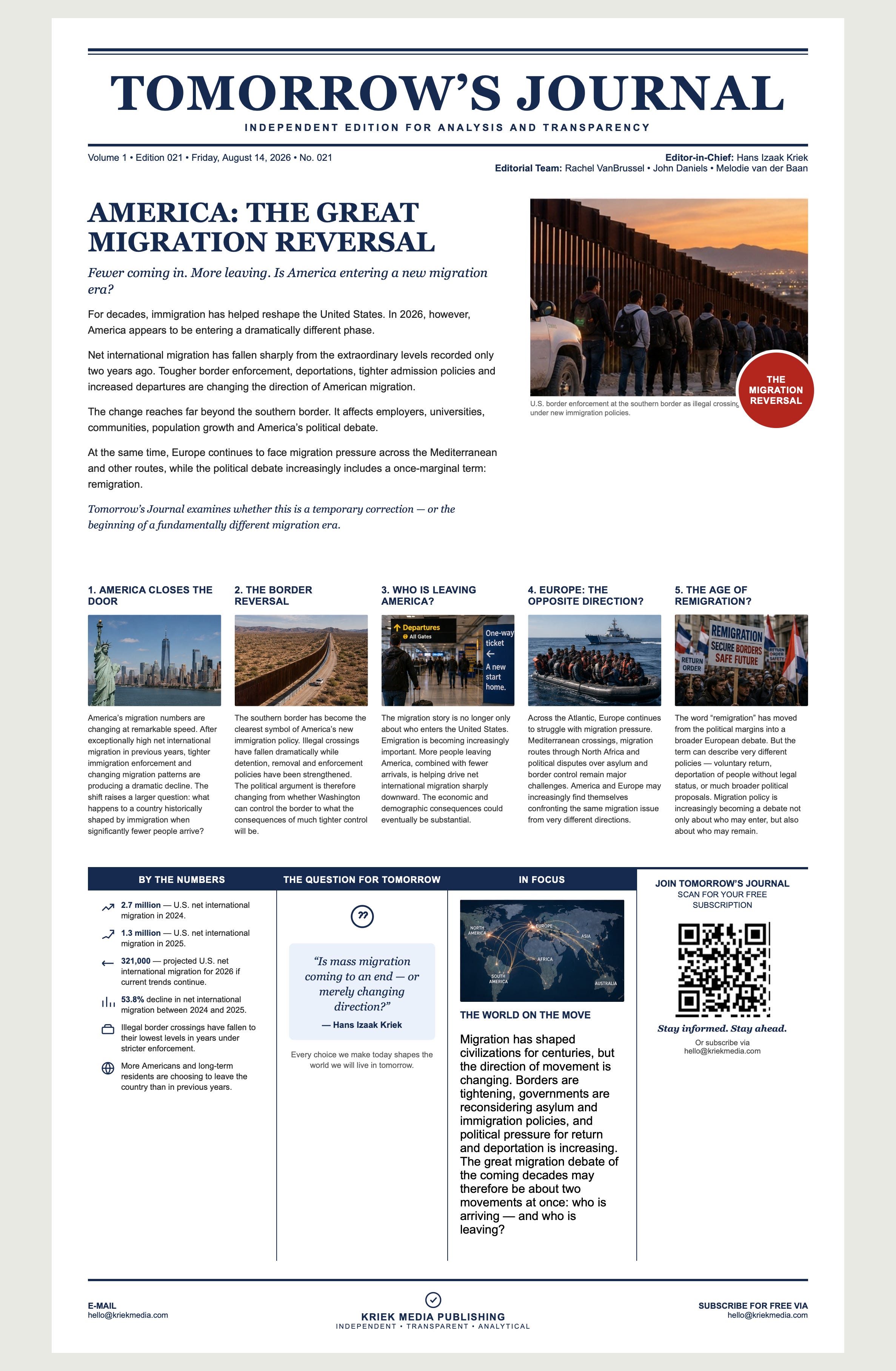
For decades, immigration has helped reshape the United States. In 2026, however, America appears to be entering a dramatically different phase.
Net international migration has fallen sharply from the extraordinary levels recorded only two years ago. Tougher border enforcement, deportations, tighter admission policies and increased departures are changing the direction of American migration.
The change reaches far beyond the southern border. It affects employers, universities, communities, population growth and America’s political debate.
At the same time, Europe continues to face migration pressure across the Mediterranean and other routes, while the political debate increasingly includes a once-marginal term: remigration.
Tomorrow’s Journal examines whether this is a temporary correction, or the beginning of a fundamentally different migration era.
America Closes the Door
America’s migration numbers are changing at remarkable speed. After exceptionally high net international migration in previous years, tighter immigration enforcement and changing migration patterns are producing a dramatic decline. The shift raises a larger question: what happens to a country historically shaped by immigration when significantly fewer people arrive?
The Border Reversal
The southern border has become the clearest symbol of America’s new immigration policy. Illegal crossings have fallen dramatically while detention, removal and enforcement policies have been strengthened. The political argument is therefore changing from whether Washington can control the border to what the consequences of much tighter control will be.
Who Is Leaving America?
The migration story is no longer only about who enters the United States. Emigration is becoming increasingly important. More people leaving America, combined with fewer arrivals, is helping drive net international migration sharply downward. The economic and demographic consequences could eventually be substantial.
Europe: The Opposite Direction?
Across the Atlantic, Europe continues to struggle with migration pressure. Mediterranean crossings, migration routes through North Africa and political disputes over asylum and border control remain major challenges. America and Europe may increasingly find themselves confronting the same migration issue from very different directions.
The Age of Remigration?
The word “remigration” has moved from the political margins into a broader European debate. But the term can describe very different policies: voluntary return, deportation of people without legal status, or much broader political proposals. Migration policy is increasingly becoming a debate not only about who may enter, but also about who may remain.
By the Numbers
2.7 million: U.S. net international migration in 2024.
1.3 million: U.S. net international migration in 2025.
321,000: projected U.S. net international migration for 2026 if current trends continue.
53.8% decline in net international migration between 2024 and 2025.
Illegal border crossings have fallen to their lowest levels in years under stricter enforcement.
More Americans and long-term residents are choosing to leave the country than in previous years.
The Question for Tomorrow
“Is mass migration coming to an end, or merely changing direction?”
Hans Izaak Kriek
Every choice we make today shapes the world we will live in tomorrow.
The World on the Move
Migration has shaped civilizations for centuries, but the direction of movement is changing. Borders are tightening, governments are reconsidering asylum and immigration policies, and political pressure for return and deportation is increasing. The great migration debate of the coming decades may therefore be about two movements at once: who is arriving, and who is leaving?