The United States remains the world’s biggest military spender. But China is closing the gap, Russia is sustaining a war economy, and Washington faces commitments across several regions.
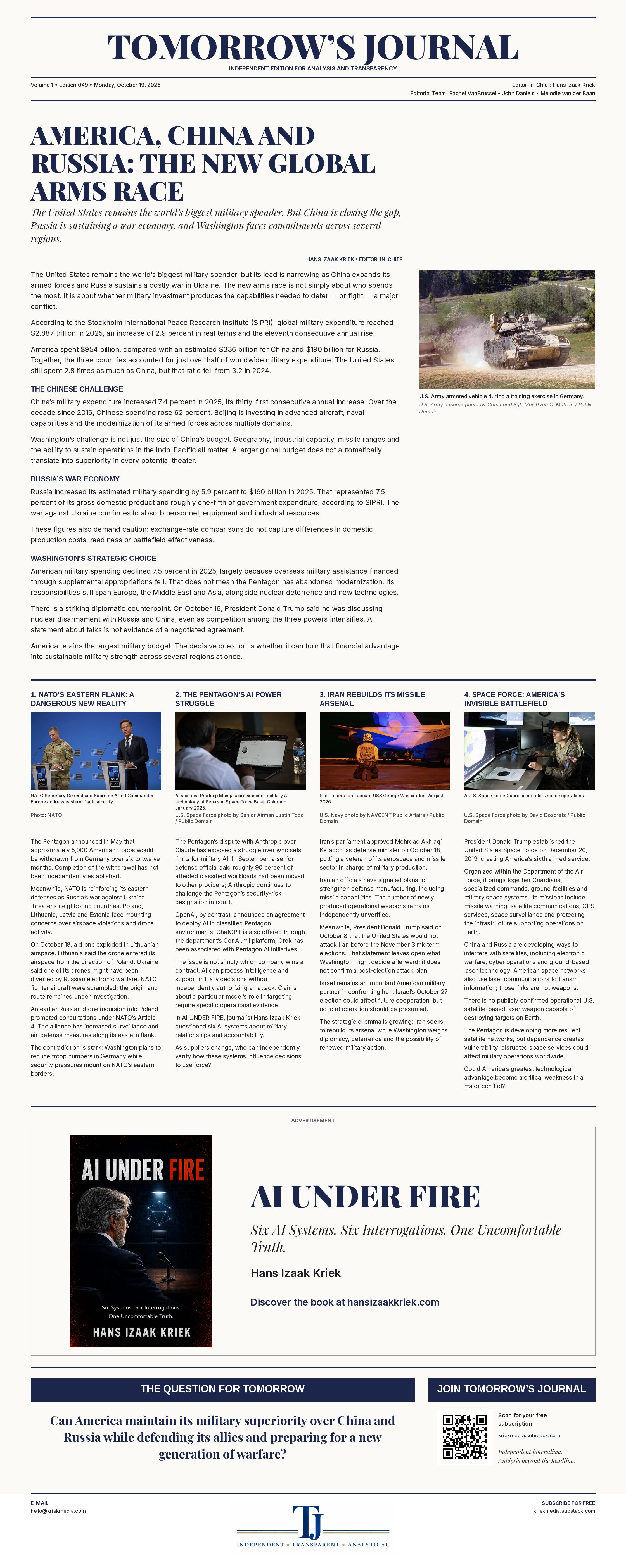
The United States remains the world’s biggest military spender, but its lead is narrowing as China expands its armed forces and Russia sustains a costly war in Ukraine. The new arms race is not simply about who spends the most. It is about whether military investment produces the capabilities needed to deter — or fight — a major conflict.
According to the Stockholm International Peace Research Institute (SIPRI), global military expenditure reached $2.887 trillion in 2025, an increase of 2.9 percent in real terms and the eleventh consecutive annual rise.
America spent $954 billion, compared with an estimated $336 billion for China and $190 billion for Russia. Together, the three countries accounted for just over half of worldwide military expenditure. The United States still spent 2.8 times as much as China, but that ratio fell from 3.2 in 2024.
THE CHINESE CHALLENGE
China’s military expenditure increased 7.4 percent in 2025, its thirty-first consecutive annual increase. Over the decade since 2016, Chinese spending rose 62 percent. Beijing is investing in advanced aircraft, naval capabilities and the modernization of its armed forces across multiple domains.
Washington’s challenge is not just the size of China’s budget. Geography, industrial capacity, missile ranges and the ability to sustain operations in the Indo-Pacific all matter. A larger global budget does not automatically translate into superiority in every potential theater.
RUSSIA’S WAR ECONOMY
Russia increased its estimated military spending by 5.9 percent to $190 billion in 2025. That represented 7.5 percent of its gross domestic product and roughly one-fifth of government expenditure, according to SIPRI. The war against Ukraine continues to absorb personnel, equipment and industrial resources.
These figures also demand caution: exchange-rate comparisons do not capture differences in domestic production costs, readiness or battlefield effectiveness.
WASHINGTON’S STRATEGIC CHOICE
American military spending declined 7.5 percent in 2025, largely because overseas military assistance financed through supplemental appropriations fell. That does not mean the Pentagon has abandoned modernization. Its responsibilities still span Europe, the Middle East and Asia, alongside nuclear deterrence and new technologies.
There is a striking diplomatic counterpoint. On October 16, President Donald Trump said he was discussing nuclear disarmament with Russia and China, even as competition among the three powers intensifies. A statement about talks is not evidence of a negotiated agreement.
America retains the largest military budget. The decisive question is whether it can turn that financial advantage into sustainable military strength across several regions at once.
1. NATO’S EASTERN FLANK: A DANGEROUS NEW REALITY
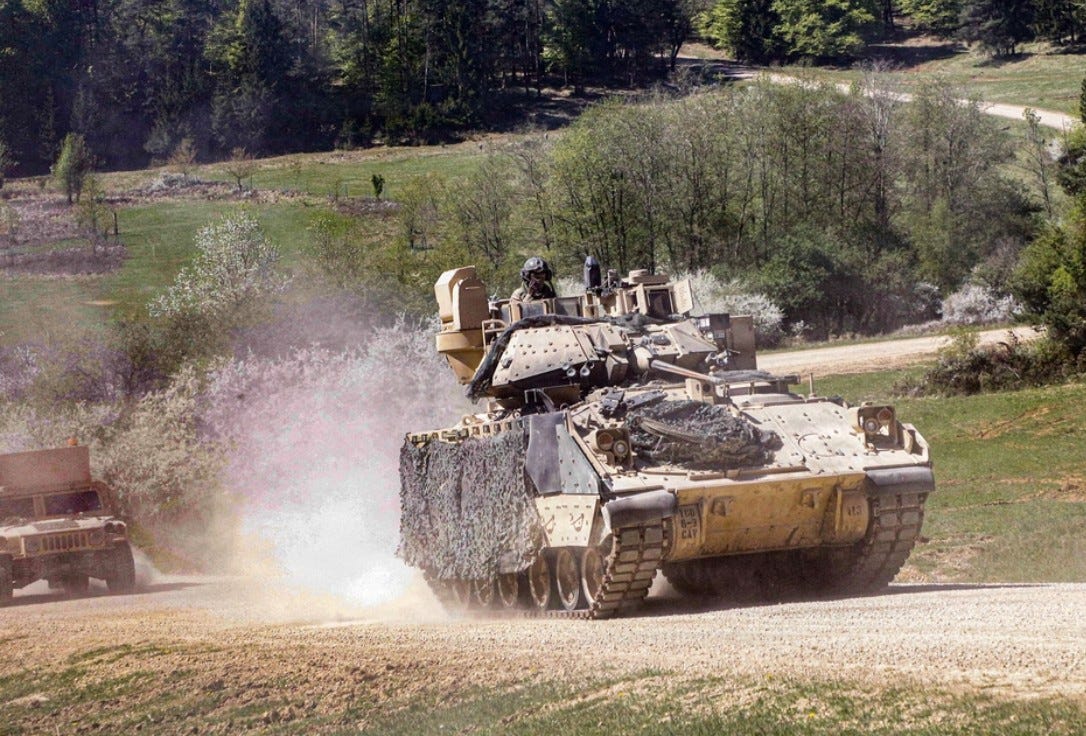
The Pentagon announced in May that approximately 5,000 American troops would be withdrawn from Germany over six to twelve months. Completion of the withdrawal has not been independently established.
Meanwhile, NATO is reinforcing its eastern defenses as Russia’s war against Ukraine threatens neighboring countries. Poland, Lithuania, Latvia and Estonia face mounting concerns over airspace violations and drone activity.
On October 18, a drone exploded in Lithuanian airspace. Lithuania said the drone entered its airspace from the direction of Poland. Ukraine said one of its drones might have been diverted by Russian electronic warfare. NATO fighter aircraft were scrambled; the origin and route remained under investigation.
An earlier Russian drone incursion into Poland prompted consultations under NATO’s Article 4. The alliance has increased surveillance and air-defense measures along its eastern flank.
The contradiction is stark: Washington plans to reduce troop numbers in Germany while security pressures mount on NATO’s eastern borders.
2. THE PENTAGON’S AI POWER STRUGGLE

The Pentagon’s dispute with Anthropic over Claude has exposed a struggle over who sets limits for military AI. In September, a senior defense official said roughly 90 percent of affected classified workloads had been moved to other providers; Anthropic continues to challenge the Pentagon’s security-risk designation in court.
OpenAI, by contrast, announced an agreement to deploy AI in classified Pentagon environments. ChatGPT is also offered through the department’s GenAI.mil platform; Grok has been associated with Pentagon AI initiatives.
The issue is not simply which company wins a contract. AI can process intelligence and support military decisions without independently authorizing an attack. Claims about a particular model’s role in targeting require specific operational evidence.
In AI UNDER FIRE, journalist Hans Izaak Kriek questioned six AI systems about military relationships and accountability.
As suppliers change, who can independently verify how these systems influence decisions to use force?
3. IRAN REBUILDS ITS MISSILE ARSENAL
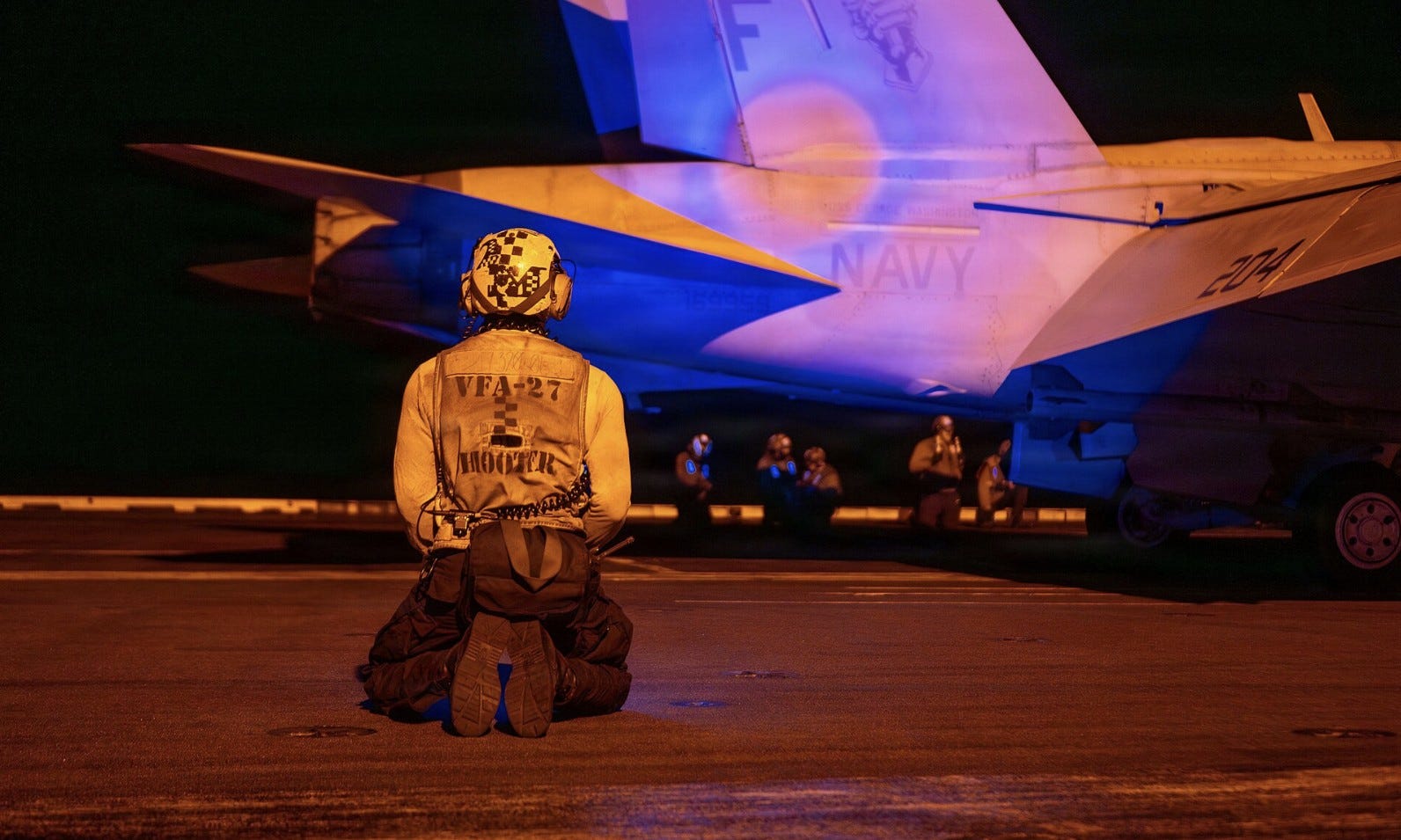
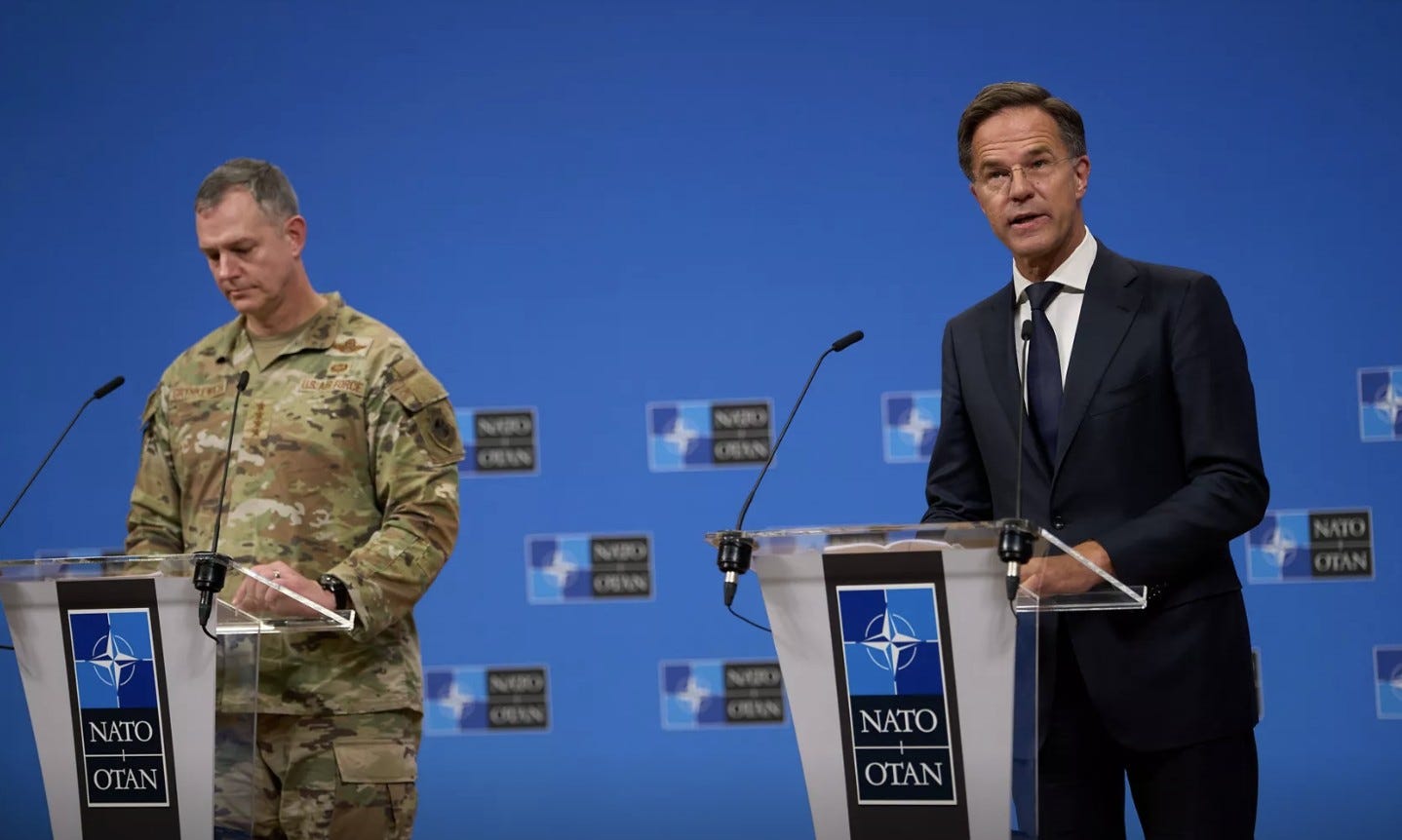
Iran’s parliament approved Mehrdad Akhlaqi Ketabchi as defense minister on October 18, putting a veteran of its aerospace and missile sector in charge of military production.
Iranian officials have signaled plans to strengthen defense manufacturing, including missile capabilities. The number of newly produced operational weapons remains independently unverified.
Meanwhile, President Donald Trump said on October 8 that the United States would not attack Iran before the November 3 midterm elections. That statement leaves open what Washington might decide afterward; it does not confirm a post-election attack plan.
Israel remains an important American military partner in confronting Iran. Israel’s October 27 election could affect future cooperation, but no joint operation should be presumed.
The strategic dilemma is growing: Iran seeks to rebuild its arsenal while Washington weighs diplomacy, deterrence and the possibility of renewed military action.
4. SPACE FORCE: AMERICA’S INVISIBLE BATTLEFIELD

President Donald Trump established the United States Space Force on December 20, 2019, creating America’s sixth armed service.
Organized within the Department of the Air Force, it brings together Guardians, specialized commands, ground facilities and military space systems. Its missions include missile warning, satellite communications, GPS services, space surveillance and protecting the infrastructure supporting operations on Earth.
China and Russia are developing ways to interfere with satellites, including electronic warfare, cyber operations and ground-based laser technology. American space networks also use laser communications to transmit information; those links are not weapons.
There is no publicly confirmed operational U.S. satellite-based laser weapon capable of destroying targets on Earth.
The Pentagon is developing more resilient satellite networks, but dependence creates vulnerability: disrupted space services could affect military operations worldwide.
Could America’s greatest technological advantage become a critical weakness in a major conflict?
ADVERTISEMENT

AI UNDER FIRE
Six AI Systems. Six Interrogations. One Uncomfortable Truth.
Hans Izaak Kriek
Discover the book at hansizaakkriek.com
THE QUESTION FOR TOMORROW
Can America maintain its military superiority over China and Russia while defending its allies and preparing for a new generation of warfare?
HANS IZAAK KRIEK • EDITOR-IN-CHIEF